The Slow Boat from Huay Xai via Pakbeng
Two long days drifting down the Mekong between forested hills, sandbanks and riverside villages, with a night in the little river town of Pakbeng.
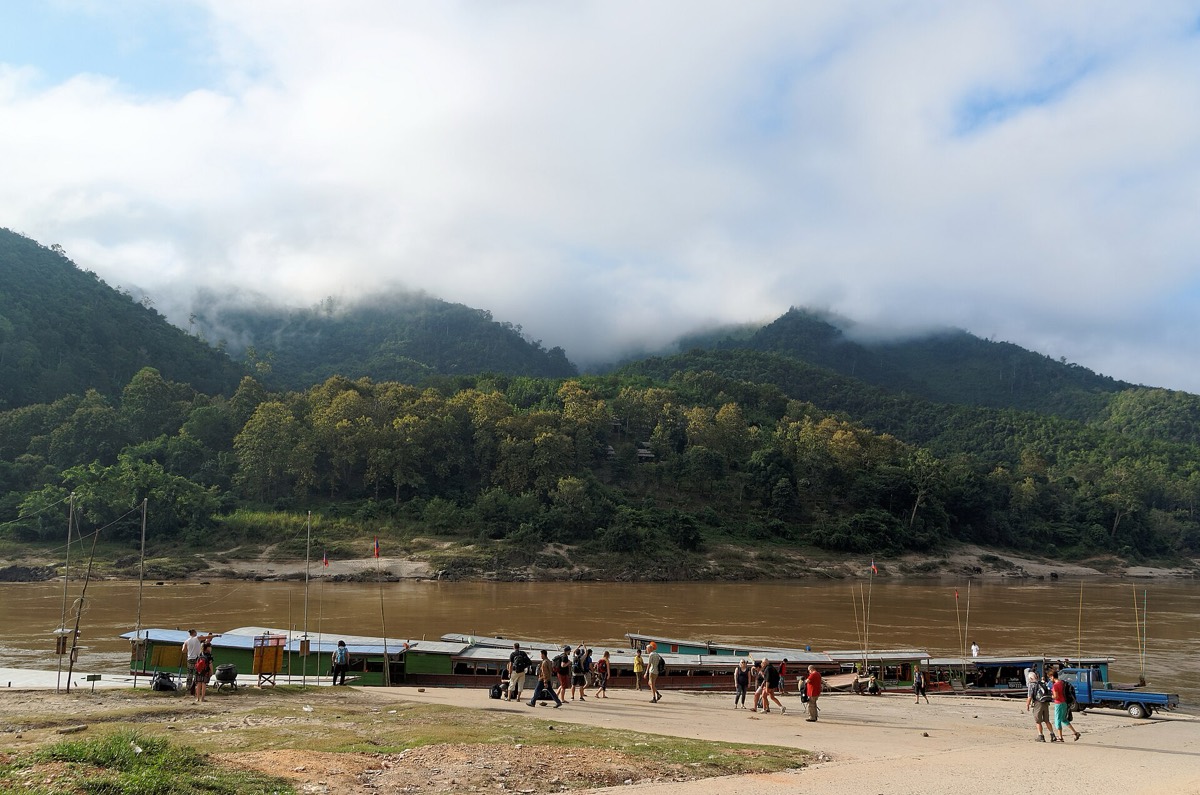

- Area
- Mekong & Nam Khan
- Start from
- Huay Xai, on the Thai border
- Distance
- about 300 km by river
- Time needed
- 2 days
- Best season
- All year; most comfortable November – February
- Difficulty
- Easy
- Transport
- Public slow boat, with a night in Pakbeng
- Tickets & rules
- Lao visa or entry stamp at the Huay Xai border; boat ticket
Why go
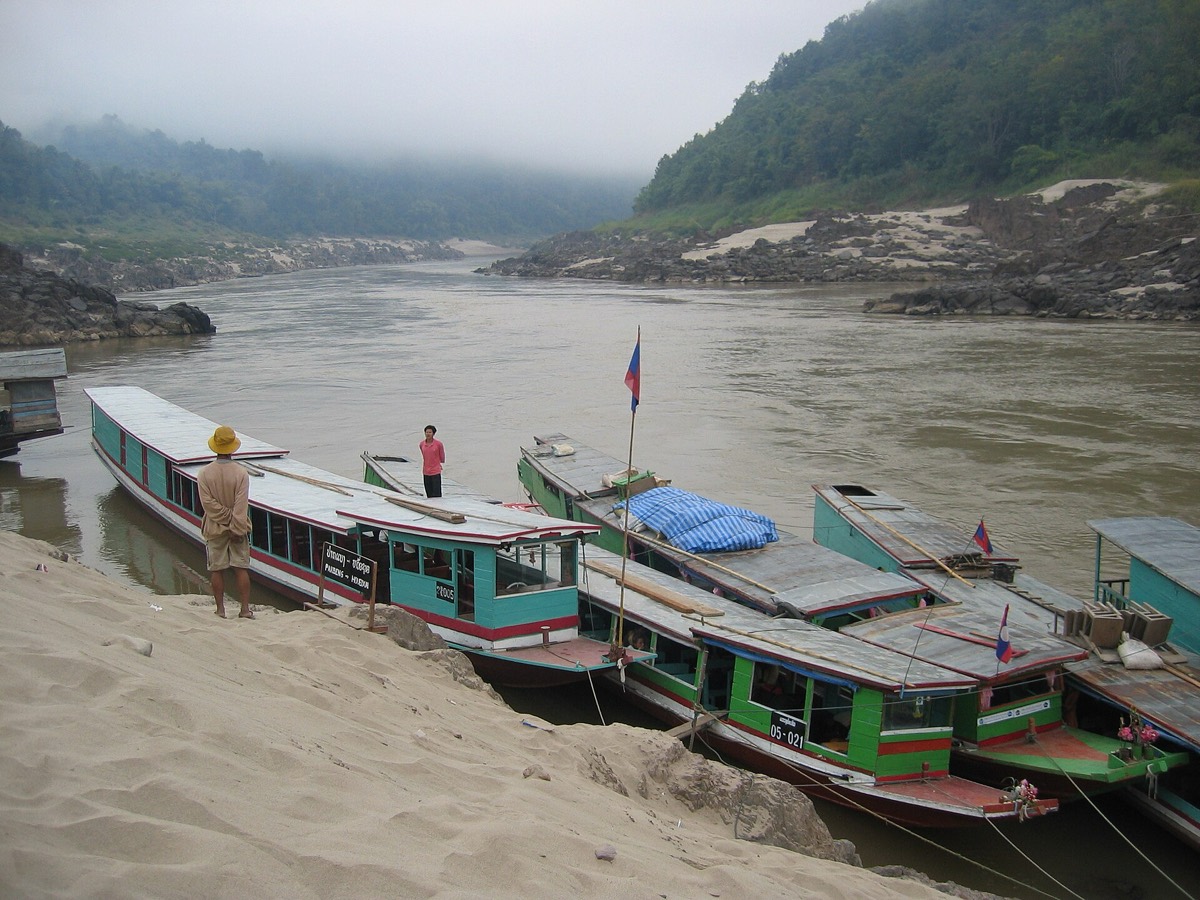
The slow boat is one of the classic journeys of Southeast Asia, and for once the reputation is earned. Travelling from the Thai border at Huay Xai down to Luang Prabang takes two days, roughly seven to nine hours each day, on a long wooden boat with a roof, rows of seats and a small engine thumping at the back.
There is nothing to do but watch: jungle-covered slopes, rocky outcrops, sandy beaches where children play and buffalo graze, villages of stilt houses, fishermen in narrow boats. Every so often the boat pulls in to drop off a family with rice sacks or pick up a monk.
It is the best way I know to arrive in Luang Prabang. After two days on the water, when the golden spire of Phousi appears above the trees, you feel you have earned the town.
The story
For centuries the Mekong was the highway of northern Laos. Traders, armies, monks and royal envoys travelled up and down it, and towns grew at its landings. Even into the late twentieth century, roads in the region were few and poor, and the river remained the main link between the north and Luang Prabang.
Huay Xai, the starting point, faces the Thai town of Chiang Khong across the river, and the two are now linked by a friendship bridge a few kilometres out of town. Many travellers arrive from Chiang Rai in Thailand, cross at the bridge, and stay a night in Huay Xai before the boat leaves the following morning.
Pakbeng, the overnight stop, is a single steep street of guesthouses, restaurants and shops clinging to the hillside above the landing. It exists largely to serve the boats, and in the evening it fills with travellers comparing notes. In the morning, mist hangs over the river and the market sells sticky rice and bananas for the day ahead.
The river is changing. Hydropower dams are planned and built along the Mekong and its tributaries, and long stretches may look different in coming years. For now, the slow boat still runs, but it is worth checking current schedules before planning around it.

Getting there
Slow boats usually leave Huay Xai in the morning, and tickets can be bought at the boat landing or through guesthouses. The boats stop overnight in Pakbeng, where you find a room yourself, and continue to Luang Prabang the next day, arriving in the late afternoon at a landing some kilometres upstream of town, from where tuk-tuks take you into the centre.
Faster speedboats exist, but they are noisy, cramped and have a poor safety record; the slow boat is much more pleasant.
A suggested plan
- Day 1, morningBoard at Huay Xai early to find a good seat; bring a cushion.
- Day 1, afternoonWatch the river and the villages; buy snacks at the small onboard counter.
- Day 1, eveningArrive in Pakbeng, find a room and have dinner overlooking the river.
- Day 2Continue downstream, passing the Pak Ou caves before arriving near Luang Prabang.
- ArrivalTake a tuk-tuk into the old town and walk to the riverside for sunset.
Where to stay
In Pakbeng, many simple guesthouses line the main street; in Luang Prabang, a riverside guesthouse makes a fitting end to the journey.
Good to know
- Bring food, water, a light jacket for the morning mist and something soft to sit on.
- Buy your own room in Pakbeng rather than through touts at the boat.
- Keep your passport and money with you, not in the luggage pile at the back.
- Avoid the speedboats, which have a history of accidents.
- Check the landing time and the price of the tuk-tuk into town before you get off; it is usually fixed and modest.