The old market and the river
Wander through the stalls of the old market at breakfast time, along the shady river, past colonial shophouses and into quiet pagodas.

- Area
- Siem Reap town
- Start from
- Psar Chas (Old Market)
- Distance
- about 3 km on foot
- Time needed
- half a day
- Best season
- All year; early morning for the market
- Difficulty
- Easy
- Transport
- On foot
- Tickets & rules
- None; modest dress for pagodas
Why go
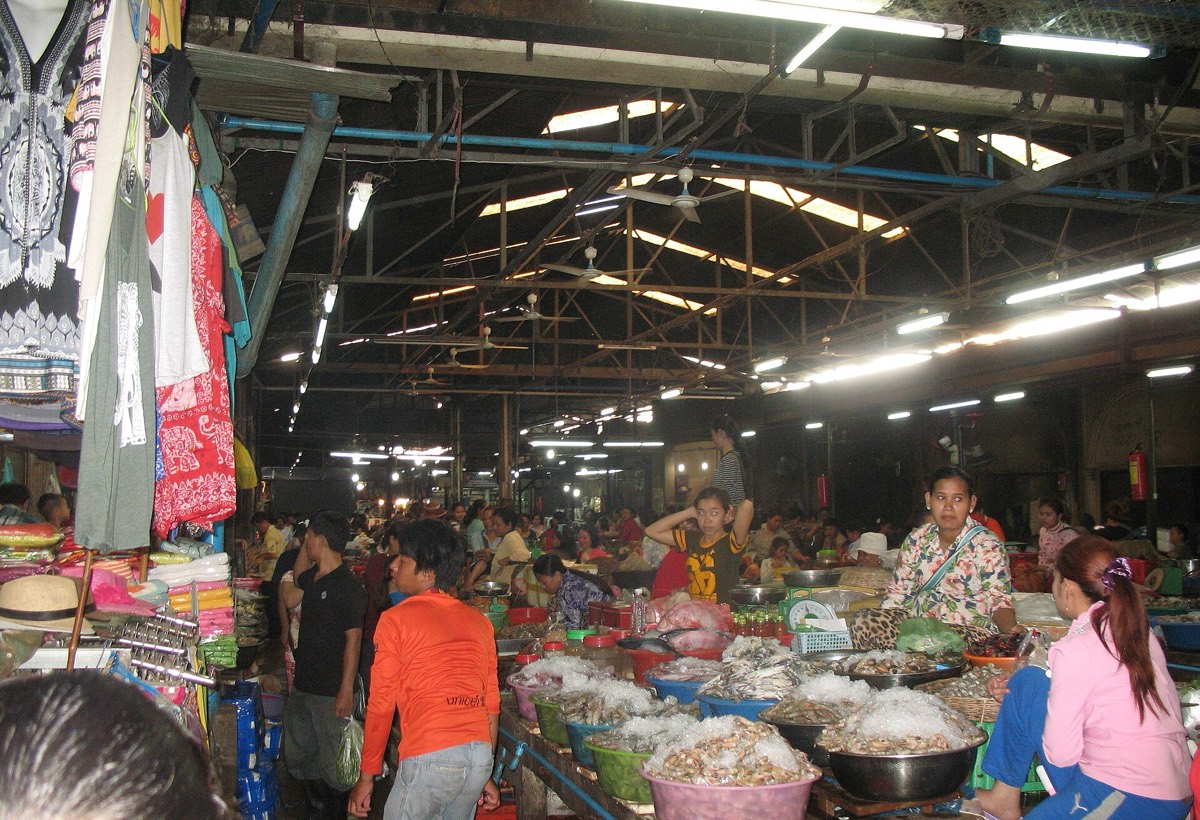
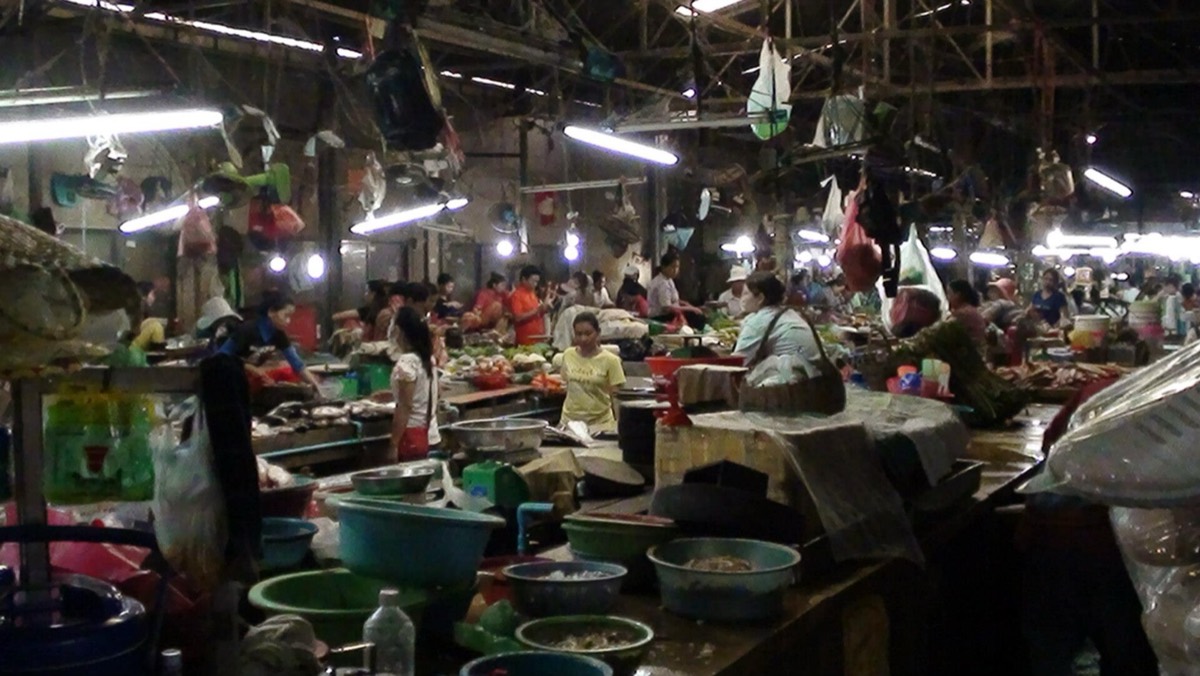
Siem Reap town is a small and walkable place, and the old market, Psar Chas, is its beating heart. In the morning, the wet market at the back is all noise and colour: women sitting cross-legged among piles of fish, prahok fermenting in vats, bunches of morning glory and lemongrass, baskets of tiny red chillies and mountains of fresh noodles.
The front of the market caters to visitors, with silk scarves, krama, wooden carvings and silver, but even here the atmosphere is unhurried. The surrounding streets are lined with old French-era shophouses, their shutters and balconies freshly painted, many now cafés.
The river walk is the gentle second half. Shady paths follow both banks, crossing on small bridges. You pass wooden houses, gardens, and pagodas where novice monks sweep the yards and old women sit in the shade.
The story
Siem Reap was a small provincial town until the twentieth century. When the French began to restore Angkor in the early 1900s, the town grew, with shophouses, a market and the first hotels for visitors. The Grand Hotel d’Angkor, opened in 1932, is still standing near the Royal Gardens.
The town’s name is often said to mean the defeat of Siam, referring to an old victory over Thai forces, though historians debate the story. For long periods in the nineteenth century the province was actually under Siamese control, and it was returned to Cambodia only in 1907.
Pagodas such as Wat Preah Prom Rath and Wat Bo are worth a visit. Wat Bo, one of the oldest in town, has nineteenth-century murals of the Reamker, the Khmer Ramayana, which include figures in Siamese and European dress, a window onto that time.

Getting there
Psar Chas is in the centre of town, near Pub Street. Most guesthouses are within walking distance; otherwise, a short tuk-tuk ride costs a dollar or two.
The river paths run north and south of the market, and the town’s small bridges let you loop back on the opposite bank.
A suggested plan
- 6:30Breakfast of noodle soup at the back of Psar Chas, then wander the wet market.
- 8:00Explore the front stalls and the old shophouses around the market.
- 9:00Walk north along the west bank of the river to Wat Preah Prom Rath.
- 10:00Cross the river and continue to Wat Bo to see the murals.
- 11:00Return along the east bank for coffee in a quiet café.
Where to stay
Guesthouses within walking distance of the market are convenient, but the streets closest to Pub Street are noisy until late; a few blocks away is calmer.
Good to know
- Haggle gently at souvenir stalls, with a smile.
- The wet market is most lively before 8:00.
- Look for krama, the checked cotton scarf, which makes a useful and inexpensive souvenir.
- Pagodas are free to visit; leave a small donation if you wish.
- Watch your bag in the crowded market lanes.
- The wet market floor can be slippery.
- Be respectful in pagodas: remove shoes before entering halls and dress modestly.