Banteay Srei and the River of a Thousand Lingas
A tiny pink sandstone temple carved as finely as jewellery, followed by a forest walk to a riverbed covered in sacred carvings.

- Area
- Far temples
- Start from
- Siem Reap town
- Distance
- about 37 km north-east of town
- Time needed
- 1 day
- Best season
- November – January, when Kbal Spean still has water
- Difficulty
- Moderate
- Transport
- Tuk-tuk (about an hour) or car
- Tickets & rules
- Angkor Pass covers both; Kbal Spean trail closes in mid-afternoon
Why go
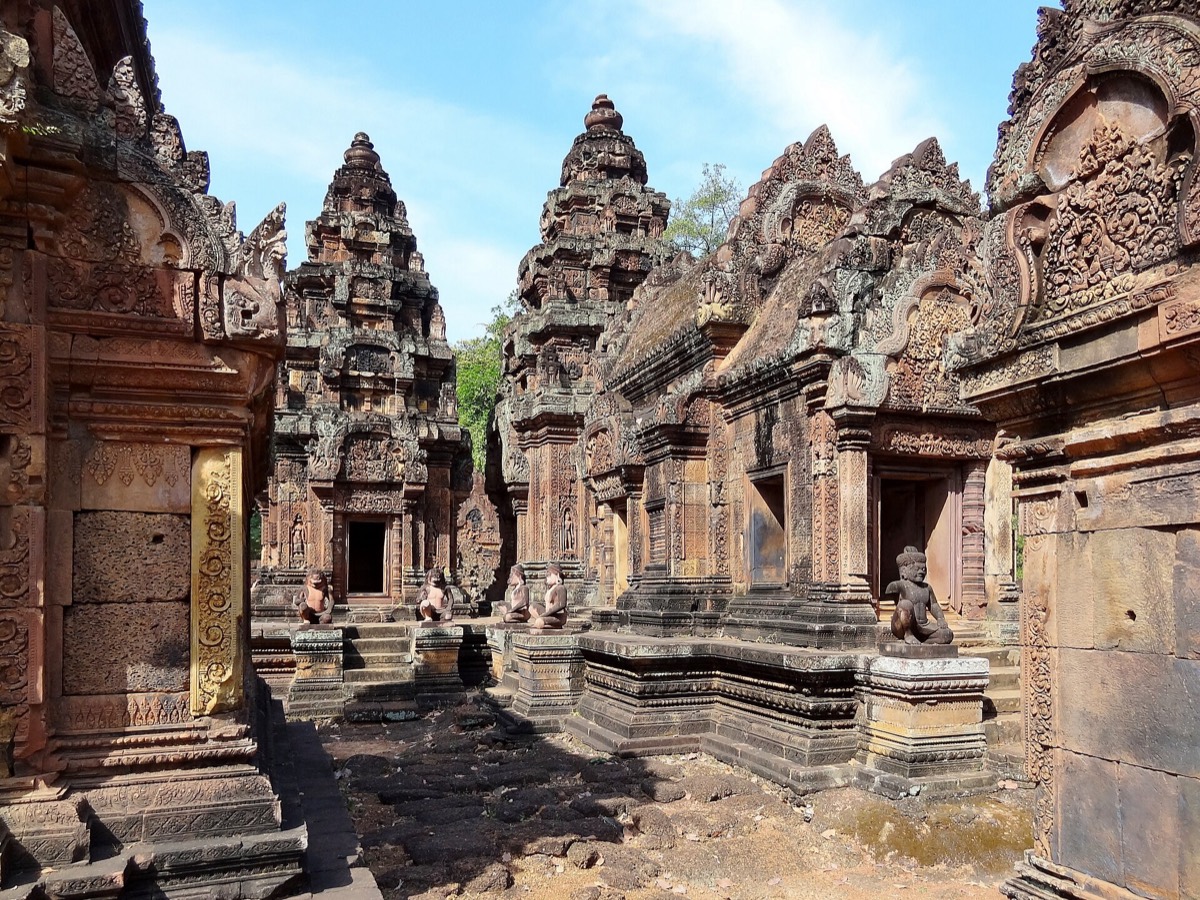
Banteay Srei is small, almost doll-sized, and that is what makes it unforgettable. Its doorways are so low that you have to stoop, but every surface is carved: deep, crisp scenes from Hindu epics, garlands, monsters and gods, all in a rosy sandstone that glows in the morning sun. Many people, including me, think it is the most beautiful carving at Angkor.
The ride there is part of the joy. You leave the main park and travel through villages where houses on stilts have palm-sugar presses in front and children wave from the roadside. Women sell bamboo tubes of sticky rice cooked with beans and coconut milk.
Further north, Kbal Spean is a short jungle hike up to a stream where the riverbed itself has been carved with lingas and images of Vishnu, Shiva and Brahma, all under rippling water.
The story
Banteay Srei, the citadel of women or the citadel of beauty, was consecrated in 967. Unusually, it was not built by a king, but by a Brahmin courtier named Yajnavaraha, a scholar and adviser to Rajendravarman II. It was dedicated to Shiva. Its small size and fine detail may reflect the fact that it was a private foundation, built with care rather than to impress.
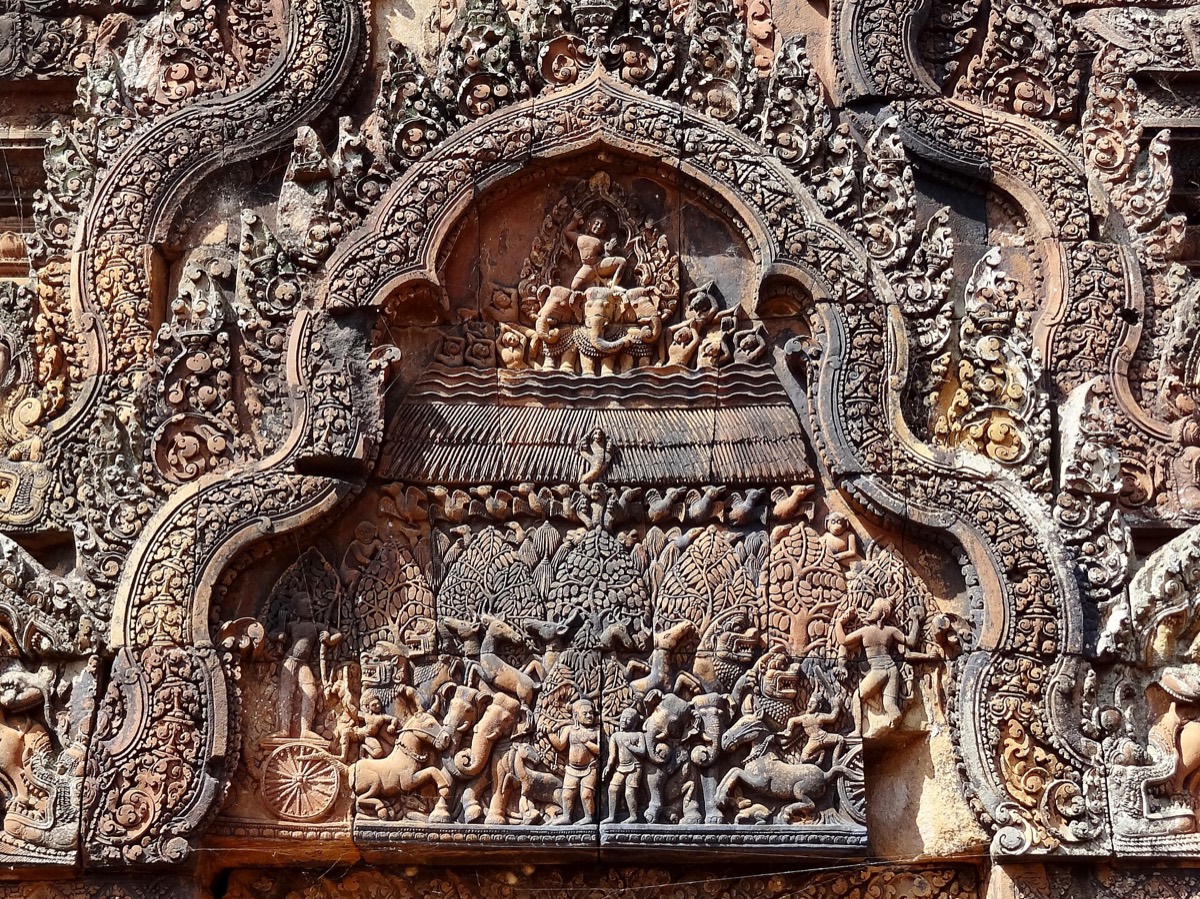
The pediments show scenes such as the demon king Ravana shaking Mount Kailash, home of Shiva, while animals flee in panic, and the death of Kama, the god of love, burned by Shiva’s third eye. The female devatas in niches are so lovely that in 1923 a young French writer, André Malraux, cut several of them out and tried to smuggle them away. He was arrested and the figures were returned; the incident inspired one of his novels.
Kbal Spean, the head of the bridge, is a stretch of riverbed carved in the eleventh and twelfth centuries. Hermits and priests carved hundreds of small lingas into the rock, believing that the water flowing over them became sacred before it continued to irrigate the plains of Angkor.

Getting there
Banteay Srei is about an hour by tuk-tuk from town; Kbal Spean is a further twenty minutes north. A day trip covering both, plus Banteay Samre on the way back, usually costs somewhat more than a day on the main circuits; agree a price in advance.
At Kbal Spean, the trail from the car park to the carvings is about 1.5 kilometres uphill, rocky in parts, and takes around forty minutes each way.
A suggested plan
- 7:00Leave town early and ride through the villages.
- 8:00 – 9:00Banteay Srei, before the tour buses arrive; look for the pediment of Ravana shaking Mount Kailash.
- 9:30 – 12:00Kbal Spean: climb to the river, walk along the carvings, then find the small waterfall.
- 12:30Lunch at one of the simple restaurants near Banteay Srei.
- 14:00Banteay Samre on the way back, a quiet twelfth-century temple in the style of Angkor Wat.
Where to stay
Stay in town. A few homestays exist in villages near Banteay Srei, a good option if you want to see rural life up close.
Good to know
- Banteay Srei is best in the morning, when the sun lights up the pink stone.
- Buy palm sugar or rice cakes from the roadside stalls; they make great gifts.
- Wear proper shoes for the Kbal Spean trail.
- There is a small visitor centre at Banteay Srei explaining its history.
- The Kbal Spean trail usually closes to new hikers in the early afternoon; check current hours.
- In the dry season the river may be almost empty, which makes carvings visible but less magical.
- Stay on marked paths in the forest; this area was mined during the conflict years.