Dawn at Dinh Cau and the Duong Dong river mouth
Watch the night boats come home past a tiny shrine on a rock, then follow the catch into Duong Dong’s morning market before the island wakes up.

- Area
- Duong Dong & west coast
- Start from
- Duong Dong town
- Distance
- walking distance in town
- Time needed
- half a day
- Best season
- All year; calmest seas November – April
- Difficulty
- Easy
- Transport
- On foot, or a short taxi from Long Beach hotels
- Tickets & rules
- None; dress modestly inside the shrine
Why go
Most visitors see Dinh Cau at sunset, when the little rock at the mouth of the Duong Dong river is crowded with phones and selfie sticks. I like it far better at first light. The fishing fleet, painted blue, red and green, slides in from the night’s work, the squid lamps still strung above the decks, and crews pass baskets of fish to women waiting on the quay. Nobody pays you any attention, which is exactly the point.
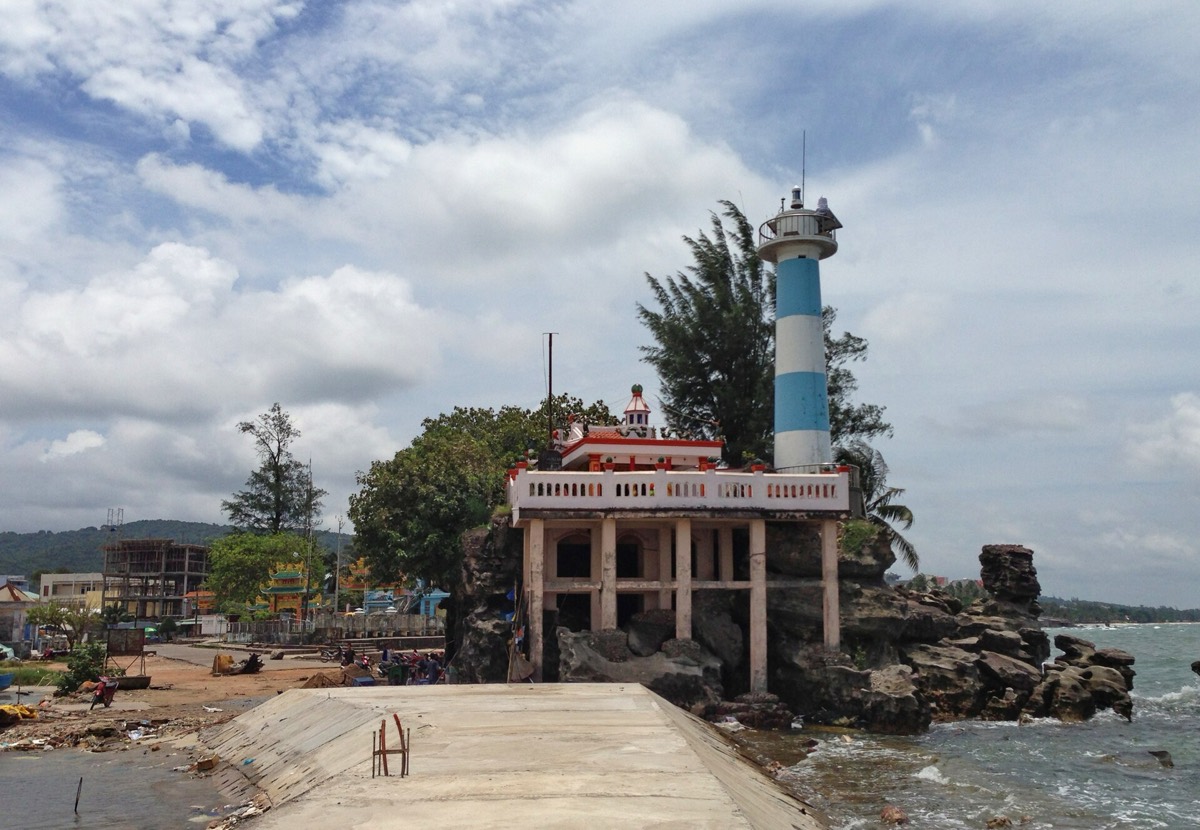
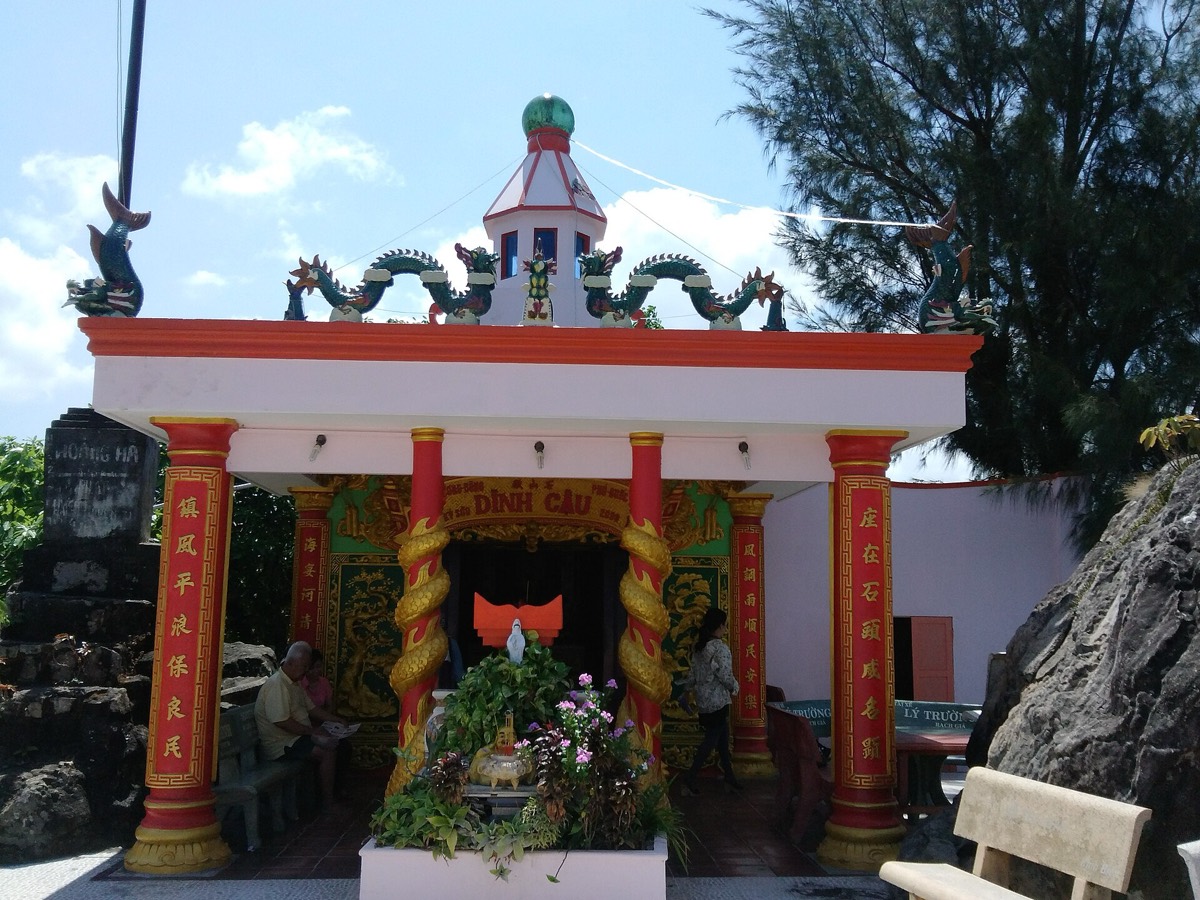
The shrine itself is small, a whitewashed temple and a squat lighthouse on top of a lump of rock joined to the shore by a short causeway. Fishermen still stop to light incense here before they go out, and old people come to sit on the steps and watch the sea. From the top you can see the whole curve of the bay and the river running inland between moored boats.
After that, the town market a few minutes’ walk upriver is in full swing, and by eight o’clock you will have had the most local morning the island offers, plus a bowl of noodles and a very strong coffee.
The story
Dinh Cậu is usually explained as the shrine of ‘Cậu’, a guardian spirit of the sea and of the river mouth, and most local accounts date the present shrine to the late 1930s. Fishermen came here to pray for calm water and a safe return, and many still do. Like so many coastal shrines in southern Vietnam, it mixes folk belief with Buddhist and Taoist touches, and nobody seems troubled by where one ends and the other begins.
The rock doubles as a navigation mark. The Duong Dong river is narrow and shallow at its mouth, and a light on Dinh Cau helped boats find the channel in the dark. Even now, with GPS on every wheelhouse, the older captains say they look for the shrine first.
Duong Dong grew from this river. For a long time Phu Quoc was a remote frontier island, closer to the Cambodian coast than to the Vietnamese mainland, settled by fishermen, pepper farmers and traders from the Mekong Delta and further afield. The river mouth was the only decent harbour on the west coast, so the town grew up around it: fish sheds, then houses on stilts, then shophouses and, much later, hotels.
Squid fishing is still a big part of the night economy. The boats carry rows of powerful bulbs that attract squid to the surface, and on a clear night the horizon off the west coast glitters with them like a second town floating on the sea.

Getting there
Dinh Cau is at the western end of Bach Dang street in the centre of Duong Dong, a five to ten minute walk from most town guesthouses. From the hotels along Long Beach a ride-hailing car or taxi takes roughly ten to twenty minutes, depending on where you are staying.
The town market is upriver along the bank, easy to find by following the motorbikes loaded with baskets.
A suggested plan
- Around 5:30Walk to the causeway and watch the boats come in while the sky turns pink behind you.
- 6:00Climb the steps to the shrine and lighthouse for the view over the bay and river.
- 6:45Follow the quay upriver to the Duong Dong market: fish, crab, sea urchins, herbs and mountains of fruit.
- 7:30Breakfast of noodle soup at a market stall, then a slow iced coffee on a riverside plastic stool.
- 8:30Back to your hotel before the heat, or carry on to the fish-sauce houses nearby.
Where to stay
Staying in Duong Dong town itself, in one of the small family hotels near the river or the night market, makes dawn walks like this effortless and keeps you close to cheap food. Long Beach, just south, is quieter at night and has more choice, but you will need a short ride into town.
Good to know
- Bring small notes for the market; nobody wants to break a large bill at six in the morning.
- Take off your shoes if you step inside the shrine room, and don’t climb on the altars for photos.
- Sunset here is pretty but crowded; for sunset, Long Beach or Ganh Dau are calmer.
- The causeway rocks are slippery when wet, especially in rainy-season mornings.
- At the market, wet floors, reversing motorbikes and ice-water runoff are the main hazards; wear shoes with grip.