Hue: the Imperial City and the Perfume River
The walled capital of Vietnam’s last dynasty, with moats, palaces, gates and gardens on the banks of a slow river, two or three hours north of Hoi An.

- Area
- Hue
- Start from
- Hoi An or Da Nang
- Distance
- about 100–130 km
- Time needed
- 1–2 days
- Best season
- February – August
- Difficulty
- Easy
- Transport
- Train, bus or car
- Tickets & rules
- Imperial City ticket (around 200,000 VND, check current price); dress modestly
Why go
Hue was the capital of Vietnam for over a century under the Nguyen emperors. Their citadel on the north bank of the Perfume River is enormous: a square fortress more than two kilometres on each side, with moats, gates and ramparts. Inside lies the Imperial City, and inside that, the Forbidden Purple City.
Much of the inner city was damaged in the wars of the 20th century, and restoration is still in progress, so expect a mix of beautifully restored palaces, ruined foundations and gardens. It is that mix that makes Hue haunting: a dragon carved into a step, a lotus pond, a lone gate standing in a field.
Hue is also about the slower pace. In the evening, dragon boats float on the river, families stroll along the banks, and the food is among the best in the country.
The story
The Nguyen dynasty was founded in 1802 by Emperor Gia Long, who unified the country and chose Hue as his capital. He began building the citadel, inspired partly by the Forbidden City in Beijing and partly by French military design.
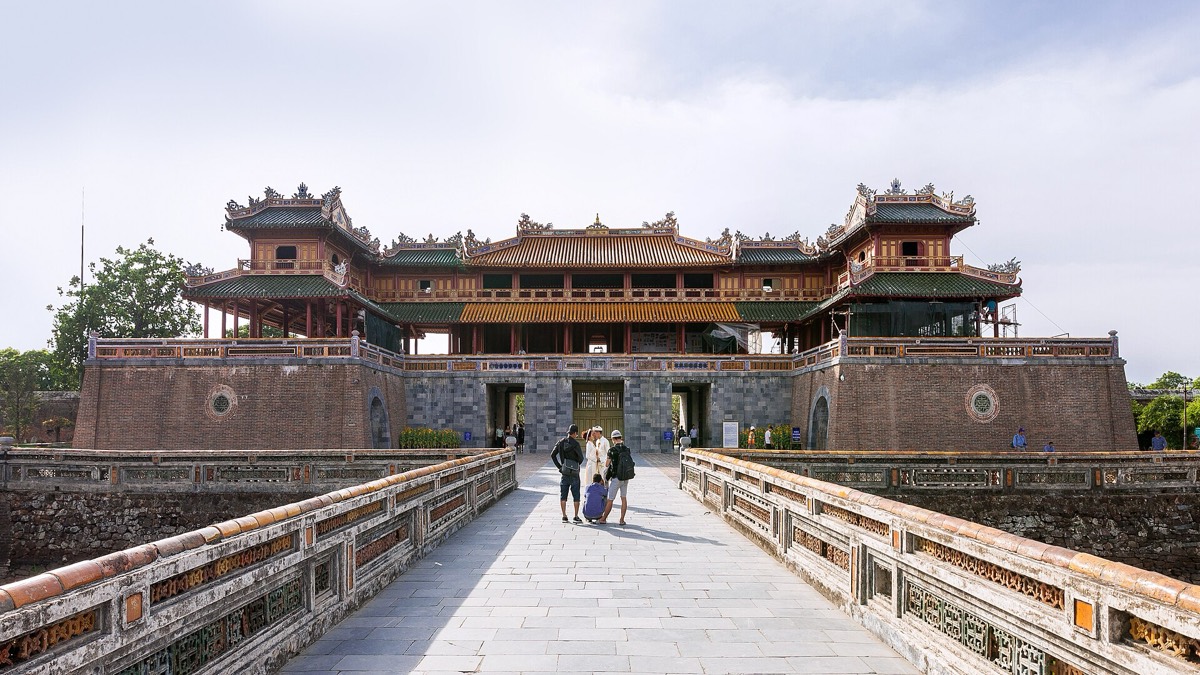
The Ngo Mon gate, the main entrance to the Imperial City, was built in 1833. From its pavilion, emperors watched ceremonies. In 1945, the last emperor, Bao Dai, abdicated there, ending the monarchy.
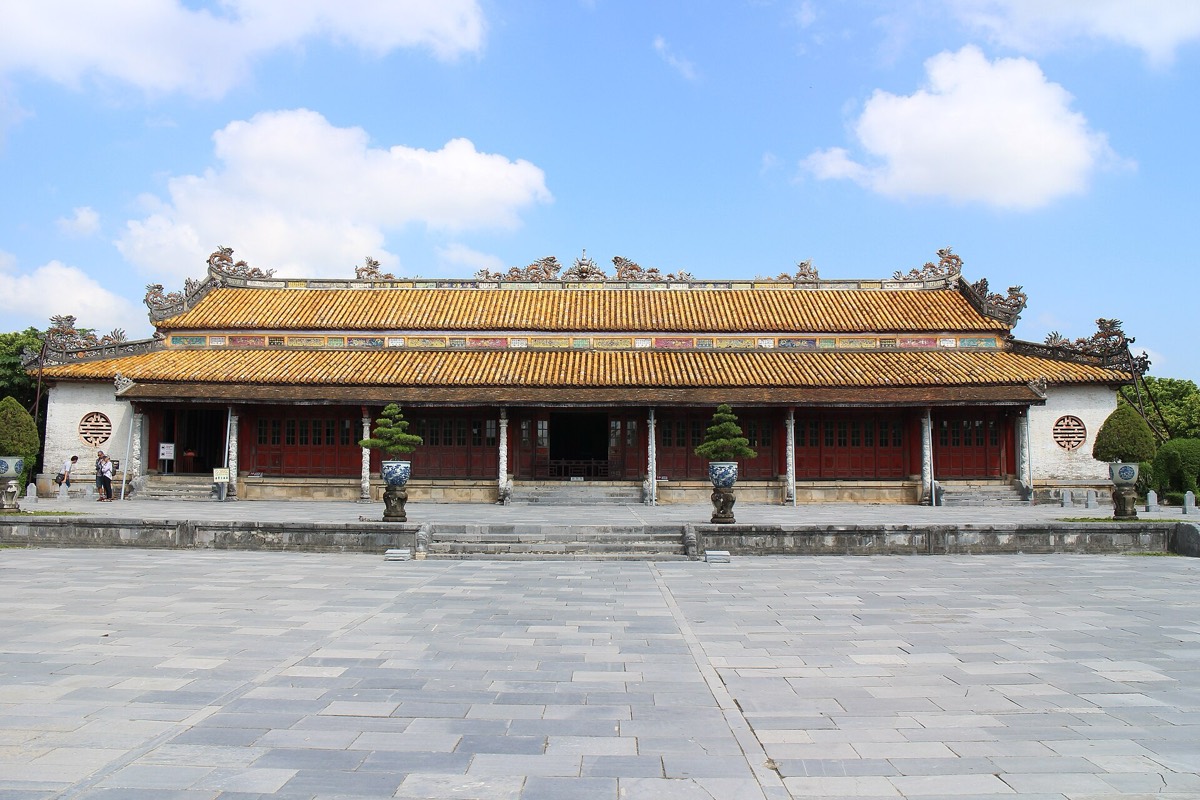
Inside, the Thai Hoa palace was the throne room, where the emperor received officials. Behind it, the Forbidden Purple City was reserved for the emperor and his family; much of it was destroyed, and only a few buildings remain.
Hue was listed by UNESCO in 1993. Restoration continues, and new parts open regularly. The court music of Hue, nha nhac, is also recognised by UNESCO, and performances are sometimes held inside the citadel, with musicians in silk robes playing drums, flutes and string instruments as they once did for the court.
The food of Hue grew from that court too. The emperors demanded many small dishes at every meal, and palace cooks invented delicate cakes of rice flour steamed in banana leaves: banh beo in tiny saucers, banh nam flat as a letter, banh loc with a translucent tapioca skin around a shrimp. Ordinary families copied them, and today they are sold for very little in markets and small family restaurants all over town. Bun bo Hue, the spicy beef and lemongrass noodle soup, is the everyday breakfast of the city.

Getting there
From Da Nang, the train takes around 2.5–3 hours along the coast. Buses and private cars take 2–3 hours via the tunnel or the Hai Van Pass. From Hoi An, add about 45 minutes.
In Hue, walk or cycle; the citadel is large, so consider an electric cart tour inside.
A suggested plan
- MorningNgo Mon gate and the Thai Hoa palace.
- Late morningThe Forbidden Purple City and the restored galleries.
- LunchBun bo Hue near Dong Ba market.
- AfternoonA walk around the moat and the flag tower.
- EveningA boat on the Perfume River with traditional music.
Where to stay
Stay at least one night in Hue. The south bank has many guesthouses and hotels; the north bank near the citadel is quieter.
Good to know
- Start early to avoid heat.
- Try the local dishes: bun bo Hue, banh khoai, com hen and royal cakes.
- Hire a guide or audio guide for context.
- Rent a bicycle to explore the city.
- Hue gets heavy rain from September to December, with floods.
- Midday heat inside the walls is intense.
- Some cyclo drivers quote high prices; agree first.