The War Remnants Museum and the Independence Palace
Two places that explain twentieth-century Saigon: a sober museum of the war years and a sixties palace frozen at the moment the war ended.

- Area
- Saigon centre
- Start from
- District 1 / District 3
- Distance
- walking distance, about 1 km between them
- Time needed
- half a day
- Best season
- All year; useful on a rainy or very hot day
- Difficulty
- Easy
- Transport
- On foot or by Grab
- Tickets & rules
- Entry tickets for both; respectful behaviour inside
Why go
These are the two museums almost everyone visits, and for good reason. Together they cover the decades that shaped the modern city, and seeing them on the same morning gives a strong sense of how recent that history still is. Neither is a light visit, but both are clearly laid out, and you can go at your own pace.
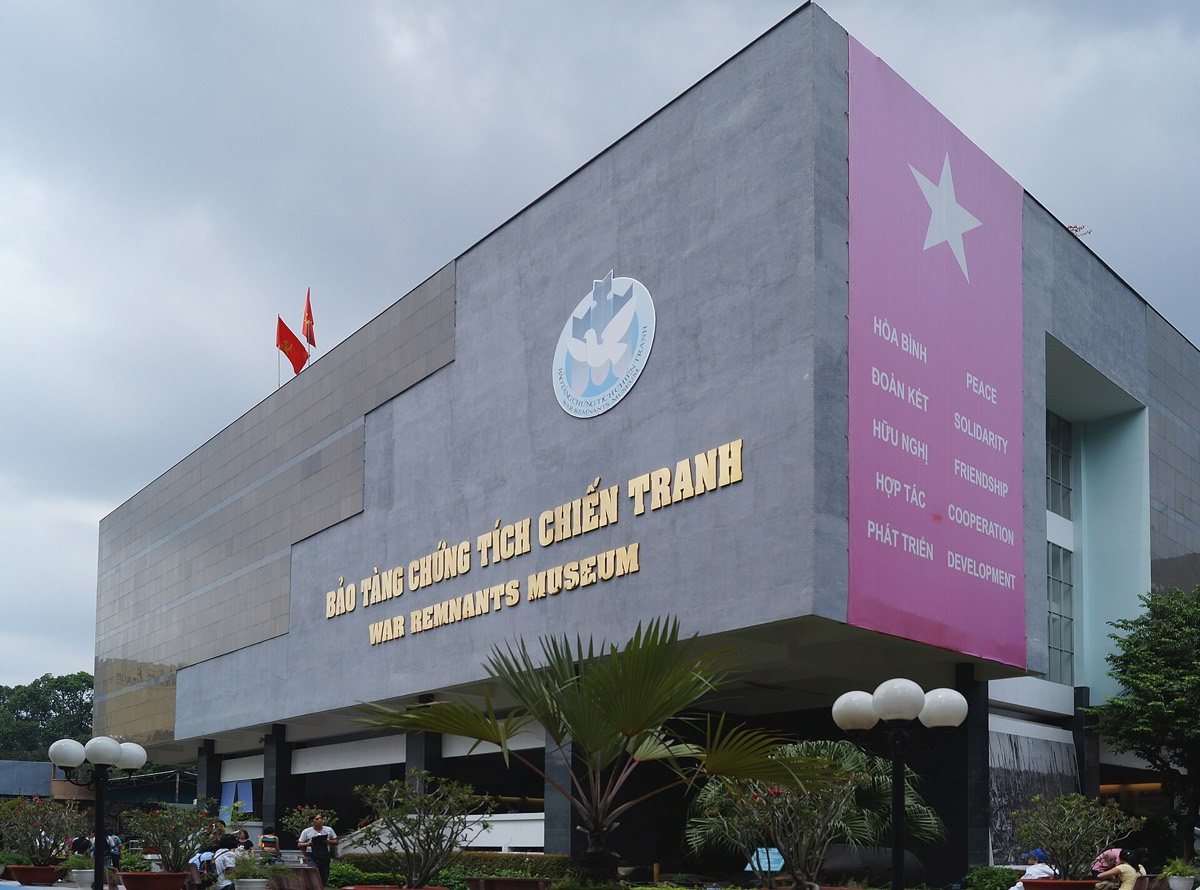
The War Remnants Museum shows the war from the Vietnamese side. In the yard stand aircraft, tanks and artillery left behind in 1975. Inside, floors of photographs document the conflict and its aftermath, including the long effects of the chemical defoliants on families. One of the most moving rooms is the exhibition of work by photographers from many countries who died covering the war. Some images are graphic; take breaks when you need to.
The Independence Palace, a short walk away, is a very different experience: wide lawns, cool modernist halls, sixties furniture, map rooms and a maze of basement bunkers with old radios and telephones.
The story
The museum opened in 1975, soon after the war ended, and was renamed several times before taking its present name in 1995. It has become one of the most visited museums in the country, and its exhibitions have been updated over the years. Visitors often find it sharpens their sense of how the war touched ordinary lives on all sides.
The palace stands on the site of the older Norodom Palace, the residence of the French governors. After that building was damaged in a bombing in 1962, it was replaced by the present one, designed by the Vietnamese architect Ngo Viet Thu and completed in 1966. Its facade of concrete screens is a clever modern take on traditional forms, and the light that falls through them into the halls is lovely.
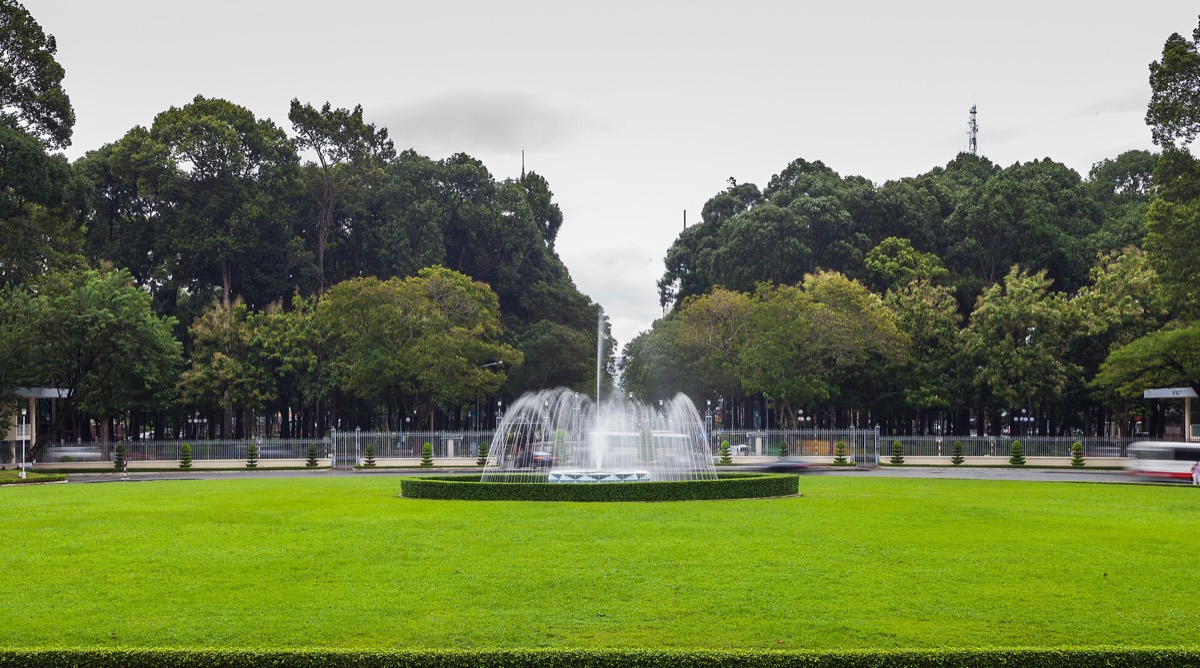
On 30 April 1975 tanks broke through the palace gates, and the war came to an end. Replicas of the tanks now stand on the lawn, and the date is still a national holiday. Inside, the rooms have been kept much as they were: reception halls with lacquer paintings, a cinema, a rooftop helipad and the bunker below with its maps still on the walls.
Older Saigonese often call the building simply Dinh Doc Lap. It is still used for official receptions, so parts of it occasionally close at short notice.

Getting there
The War Remnants Museum is on Vo Van Tan street in District 3, about fifteen minutes’ walk from Ben Thanh. The Independence Palace is a ten-minute walk east of it, with its main gate on Nam Ky Khoi Nghia street. Both are easy with Grab.
A suggested plan
- Opening timeArrive at the War Remnants Museum early, before tour groups.
- 1.5–2 hoursSee the outdoor vehicles, then work from the top floor down; leave time for the photographers’ exhibition.
- BreakSit in a café nearby, or in the shady park around the palace.
- PalaceWalk through the halls, the rooftop and the basement bunkers; allow about an hour and a half.
- OptionalFinish in Tao Dan Park nearby, among old trees and birdsong.
Where to stay
Both sites are within walking distance of central District 1 and the eastern part of District 3, so any hotel in either area works well.
Good to know
- Both places close for a long lunch break; check current hours before you go.
- The War Remnants Museum is intense; many people prefer to do it in the morning and something lighter afterwards.
- Audio guides at the palace help bring the rooms to life.
- Bring water and a hat: the palace grounds have little shade at midday.
- Some images in the museum are disturbing and unsuitable for young children.
- The palace can close for official events; check the day before.
- Be quiet and respectful; many local visitors have personal connections to this history.