Cholon: Thien Hau Temple and Binh Tay Market
Into Saigon’s Chinese town, where coils of incense hang from temple ceilings and a great tiled market still trades in wholesale by the sack.

- Area
- Cholon
- Start from
- District 1
- Distance
- about 6 km from the centre
- Time needed
- half a day
- Best season
- All year; mornings are busiest and best
- Difficulty
- Easy
- Transport
- Grab or city bus to District 5 and 6, then on foot
- Tickets & rules
- Temples free; small donations welcome; modest clothing
Why go
Cholon, the big market in Vietnamese, is Saigon’s Chinatown, though it feels less like a quarter and more like a separate city. The streets are lined with shophouses selling everything from paper offerings to dried mushrooms, and the signs mix Vietnamese with Chinese characters. It is noisy, hardworking and almost free of tourists outside a few landmarks.
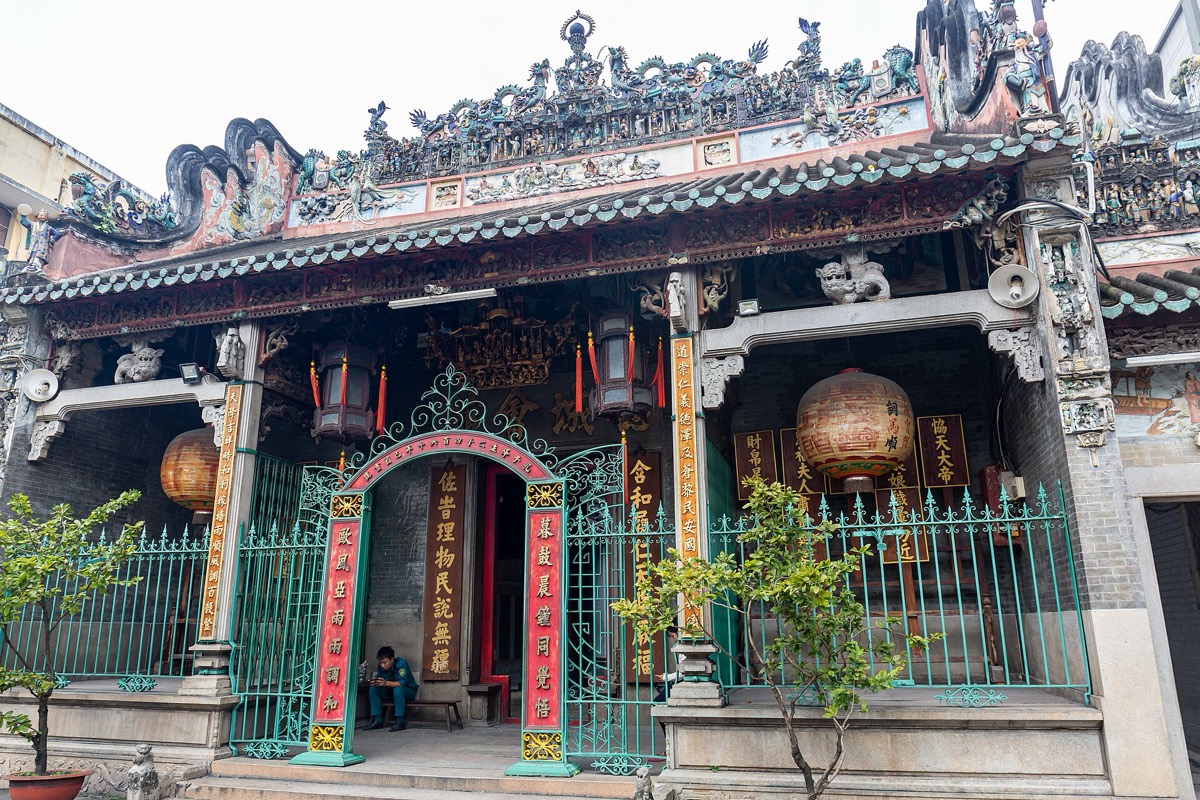
The most beautiful of those is the Thien Hau Temple, dedicated to the sea goddess who protected Chinese sailors and merchants. Inside, enormous spirals of incense hang from the ceiling, each with a prayer card attached, burning slowly for days. The roofline is crowded with porcelain figurines of gods, heroes and animals, and the light falls through the smoke in long beams.
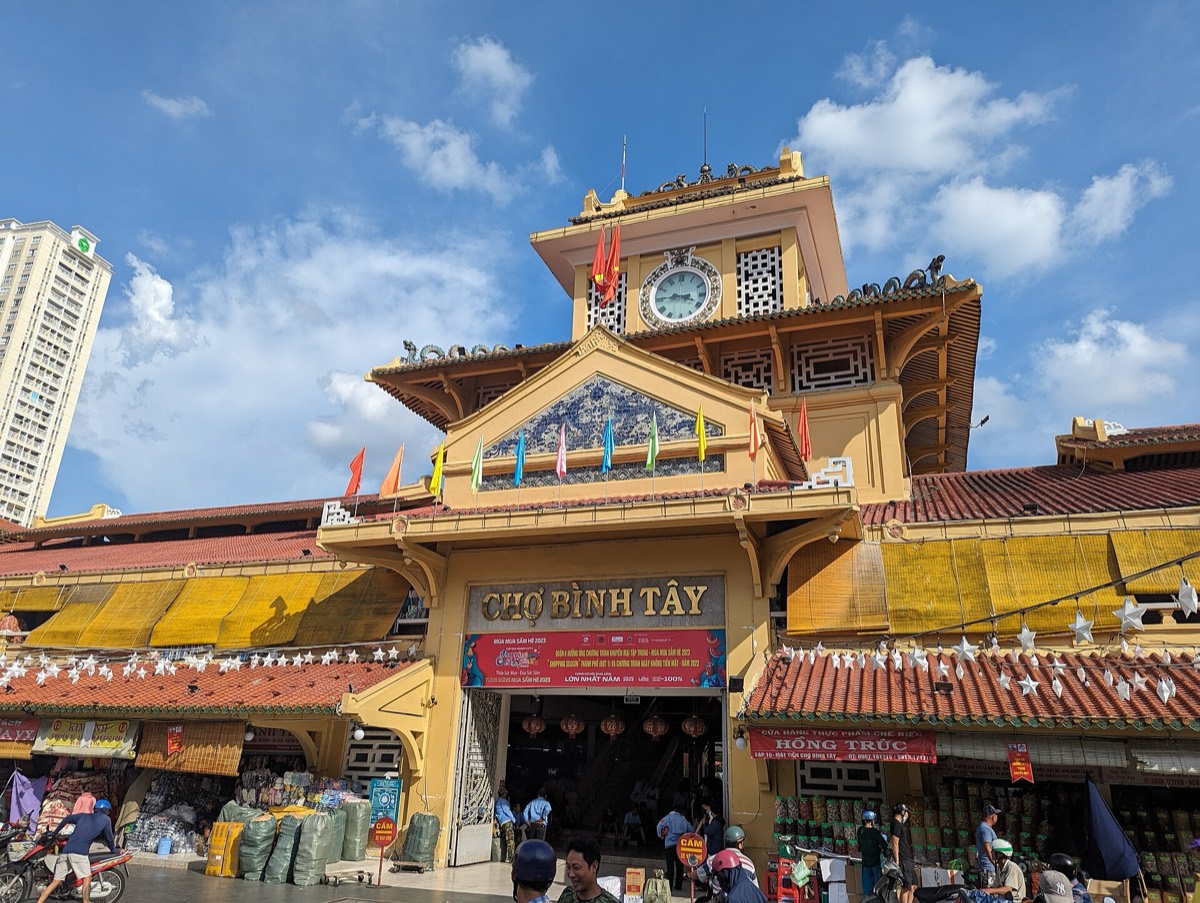
From there, walk or ride on to Binh Tay Market, a huge courtyard building with a clock tower, where traders sell wholesale goods to shopkeepers from all over the south.
The story
Chinese settlers began arriving in the south of Vietnam in the seventeenth and eighteenth centuries, many of them fleeing the fall of the Ming dynasty. They built a trading town here, separate from the citadel of Saigon, and over time the two cities grew together. Communities from Guangdong, Fujian, Chaozhou and Hainan each built their own assembly halls and temples, many of which still stand.
The Thien Hau Temple was founded by the Cantonese community in the eighteenth century, and its present form dates largely from later rebuilds. The goddess, known as Mazu in other parts of the Chinese world, is honoured with a festival on the twenty-third day of the third lunar month, when the temple overflows with worshippers.
Binh Tay Market was built in the late 1920s on the initiative of a wealthy Chinese merchant, Quach Dam, who had made his fortune trading rice and hides. His statue stands in the central courtyard, surrounded by dragons. The market was renovated in recent years, and its tiled roofs and inner courtyard have been restored.
Across Cholon, many of the community assembly halls are still in use, as places of worship, schools and meeting points. Wandering between them is like walking through a map of old southern China.

Getting there
Thien Hau Temple is on Nguyen Trai street in District 5, about twenty minutes by Grab from Ben Thanh. Binh Tay Market is about two kilometres further west, in District 6. City buses also run along Tran Hung Dao to Cholon.
A suggested plan
- 8:00Arrive at Thien Hau Temple; take your time in the courtyard and main hall.
- 9:00Walk west through the shophouse streets of District 5, looking into other assembly halls on the way.
- 10:00Binh Tay Market: the wholesale aisles, the central courtyard and Quach Dam’s statue.
- 11:30Lunch in Cholon: dim sum, duck noodles or a Chinese herbal soup.
- AfternoonReturn to the centre, or continue to the herbal medicine street nearby.
Where to stay
Most people visit Cholon from District 1. A few hotels in District 5 suit travellers who want to stay among the shophouses and eat Chinese breakfasts.
Good to know
- Buy a small coil of incense if you want to take part; temple staff will hang it for you.
- Wholesale traders at Binh Tay may not sell single items, but many do; ask politely.
- Mornings before ten are the busiest and most colourful.
- Look up at the temple roofs; the ceramic scenes are full of stories.
- The market aisles are narrow and crowded; mind your bag.
- Temple floors can be slippery from incense ash and cleaning.
- Avoid stepping on raised thresholds in temples; step over them.