Train street and the old railway line
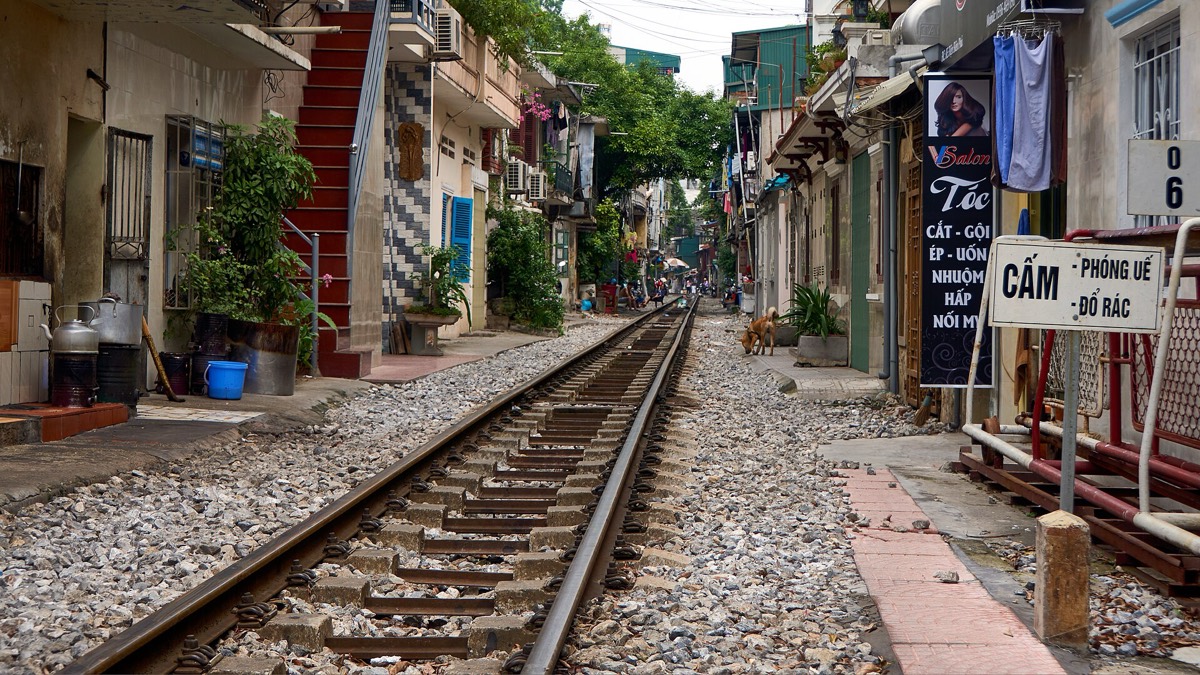
Where a narrow residential lane meets the railway, and life is lived a few steps from the passing trains, a strange and much-photographed corner of Hanoi.

- Area
- Old Quarter & Hoan Kiem
- Start from
- Hanoi Station
- Distance
- about 2 km on foot
- Time needed
- 1–2 hours
- Best season
- All year; check train times on the day
- Difficulty
- Easy
- Transport
- On foot or Grab to Le Duan street or Phung Hung street
- Tickets & rules
- None, but access is sometimes closed by local authorities
Why go
For years photographs have travelled the world of a train squeezing between houses so close that residents fold their chairs and pull back their washing as it passes. The line still runs through several narrow lanes in central Hanoi, where front doors open directly onto the tracks, children play on the sleepers and laundry hangs a step from the rails.
It is undeniably striking. Seeing the North–South railway, which runs all the way to Ho Chi Minh City, pass through a living street is a reminder of how tightly woven this city is.
But go with care and with modest expectations. Access has been restricted repeatedly since 2019 because of safety concerns, and the cafés that cater to visitors open and close with the rules. Treat this route as a walk along the railway, with the train as a possible bonus, not a promise.
The story
The railway through central Hanoi dates back to the French colonial period, when lines were laid from Hanoi to the north and south in the early twentieth century. The city then grew around it. Houses were built as close as the land allowed, and the tracks became an extension of the street: a place to dry rice, chat, and sit in the evening.
Hanoi Station itself, on Le Duan street, has a curious face. The original French building was badly damaged by bombing in 1972, and the central section was rebuilt in a plain modern style, while the old wings survived. You can see the join in the facade.
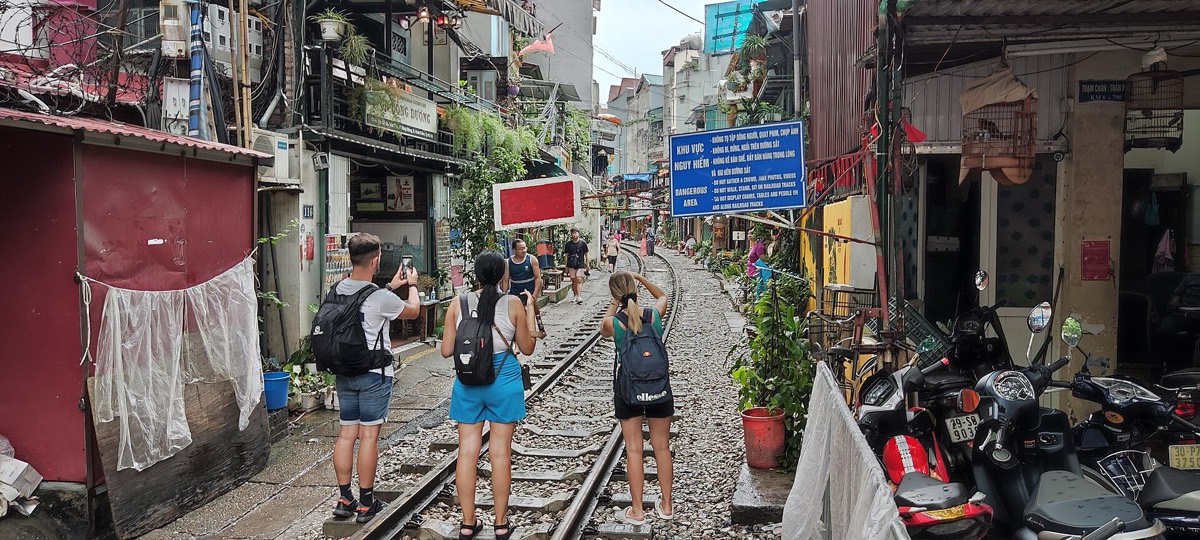
In recent years the lanes became an internet sensation, and cafés squeezed tables onto the tracks so visitors could sip coffee as trains passed within arm’s length. After incidents and near misses, the authorities began closing sections to tourists. Residents still live there, and the street is first of all their home.
The most famous stretches run between Le Duan and Phung Hung streets. Along Phung Hung, a long series of murals has been painted on the brick arches of the old railway viaduct, a calmer and very photogenic place to end the walk.

Getting there
Walk or take a Grab to Hanoi Station on Le Duan street, then follow the tracks north. Check locally whether access is currently allowed; if police or barriers are at the lane entrances, respect them.
Train times vary by day and season; guesthouses and residents usually know when the next one is due. Evening trains are common.
A suggested plan
- Late afternoonStart at Hanoi Station and look at the facade where old and new meet.
- NextWalk north along the line where access is open, keeping well back from the rails.
- When a train is dueStep into a doorway or café well away from the tracks and let it pass.
- AfterWalk to Phung Hung street to see the murals on the railway arches.
- EveningHead into the Old Quarter for dinner.
Where to stay
Any hotel in the Old Quarter or around the cathedral is close enough. The area right by the tracks is residential and the trains pass through at night, so it isn’t an ideal place to sleep.
Good to know
- If a café on the tracks is open, buy a drink; the space is someone’s home and livelihood.
- Ask residents before photographing them or their houses.
- The murals on Phung Hung are a good alternative if the lanes are closed.
- Hold your phone firmly; dropping it on the tracks is a common mishap.
- Trains are heavy and fast enough to kill. Never stand on the tracks or lean out for a photo when a train is coming.
- Rules change: if access is closed, don’t try to slip in. Fines are possible.
- Some cafés pressure visitors into buying overpriced drinks; check prices first.