The thirty-six streets of the Old Quarter
A slow wander through the guild streets of the old merchant town, where each lane still remembers what it once sold.

- Area
- Old Quarter & Hoan Kiem
- Start from
- Hoan Kiem Lake
- Distance
- about 4 km on foot
- Time needed
- half a day
- Best season
- All year; mornings and late afternoons are best
- Difficulty
- Easy
- Transport
- On foot
- Tickets & rules
- Small fees for the heritage house at 87 Ma May; free for streets and temples, with a donation welcome
Why go
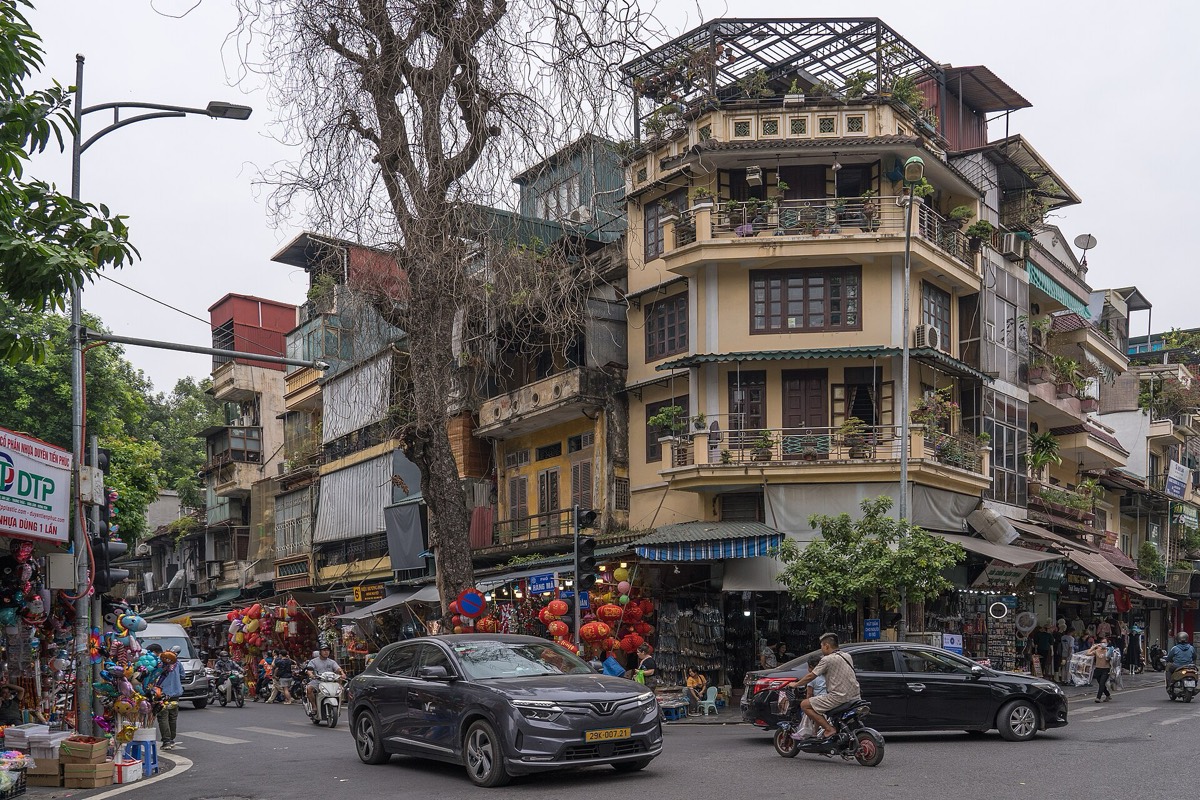
The Old Quarter is chaotic, beautiful and endlessly absorbing. Its knot of narrow streets grew up as a trading town outside the walls of the royal citadel, and the street names still tell you what was sold: Hang Bac for silver, Hang Gai for silk and hemp, Hang Thiec for tin, Hang Ma for paper votive goods. Many streets still specialise, so one block glitters with tinsmiths and the next is a red and gold wall of lanterns.
It is a place to walk without hurry. Duck under a low arch and you find a family shrine. Look up and you see tiled roofs, ornate French-era balconies and a tangle of electrical cable thick as a vine. Look down and someone is washing vegetables in a tub by the kerb.
Half a day on foot gives you the rhythm of Hanoi more honestly than any museum, and afterwards every other walk in the city makes more sense.
The story
The quarter is often called the thirty-six streets, a phrase that has more to do with tradition than counting. Craftsmen from villages across the Red River delta settled here in guilds, each clustering with others of the same trade and the same home village, and each street built a communal house to honour its craft’s patron spirit. Taxes were paid by street and trades were passed down through families.
The buildings explain themselves once you see the plan. Because shopfront frontage was taxed, families built tube houses: very narrow, sometimes only two or three metres wide, but running forty or fifty metres deep, with courtyards inside for light and air. The heritage house at 87 Ma May, a restored merchant home, shows how a family lived, cooked and prayed around those courtyards.
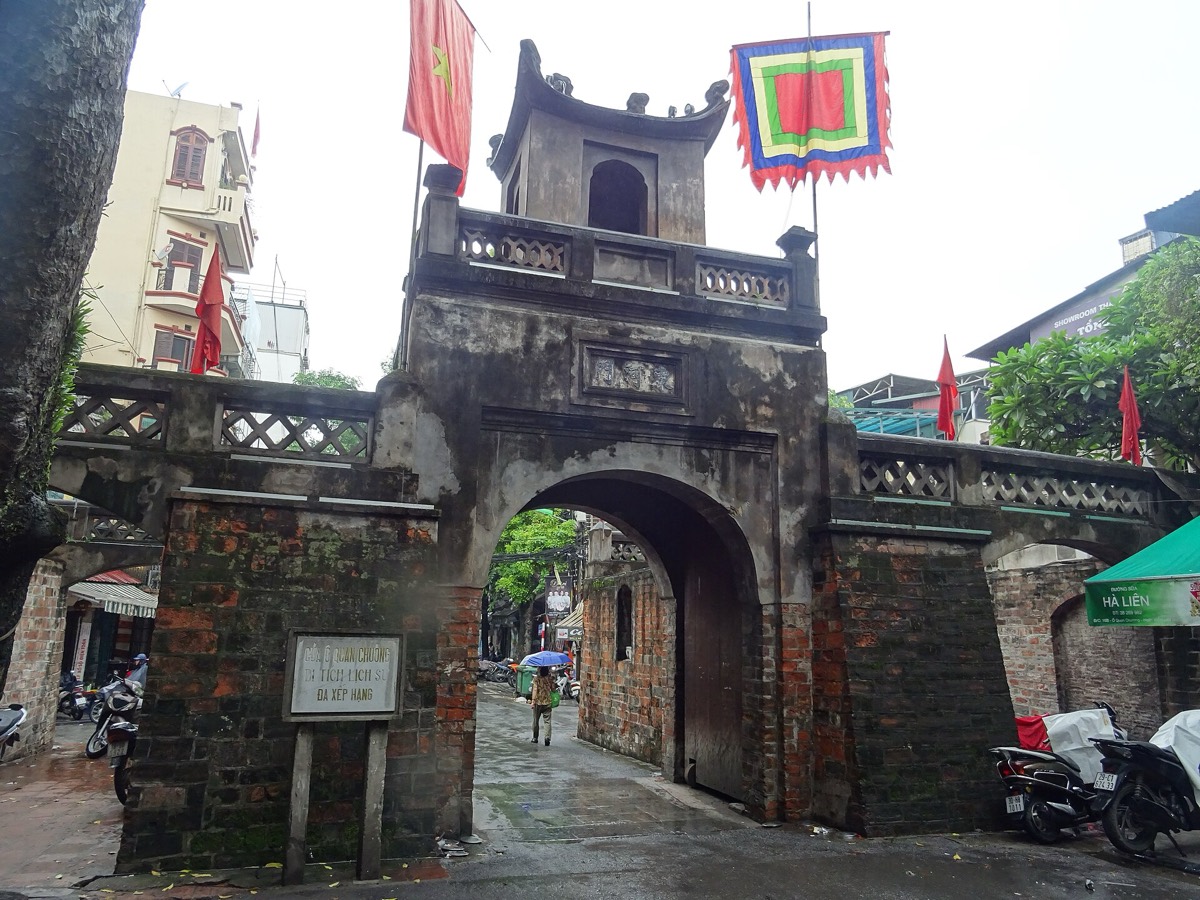
Bach Ma Temple on Hang Buom is one of the four guardian temples of the old capital. Legend says that when King Ly Thai To was building the citadel walls in the eleventh century and they kept collapsing, a white horse appeared and showed him where to build; the temple was dedicated in thanks. At the eastern edge stands O Quan Chuong, the only one of the old city gates still standing, rebuilt in the early nineteenth century.
Hang Ma deserves its own visit, especially before the Mid-Autumn Festival and Tet. It sells votive paper offerings, from paper money to paper motorbikes and smartphones, burned so that ancestors may enjoy them in the next world.

Getting there
Start at the northern tip of Hoan Kiem Lake and simply walk north. The area is compact, roughly a square kilometre, and best explored on foot. A cyclo ride is a gentle way to see it, but agree the price and duration clearly before you get in.
Download an offline map; the street layout bends and street names change every block.
A suggested plan
- 8:00From the lake, walk up Hang Dao and Hang Ngang, then turn into Hang Bac for silversmiths.
- 9:00Ma May street: visit the merchant house at number 87.
- 10:00Bach Ma Temple, then east to the old gate at O Quan Chuong.
- 11:00Hang Thiec for tinsmiths and Hang Ma for paper offerings and lanterns.
- 12:00Lunch on low stools; bun cha or a bowl of noodle soup.
- AfternoonRetreat to a café, then return around five when the streets glow.
Where to stay
The Old Quarter itself is the obvious base: noisy but unbeatable for walking. For a quieter night, choose a room on a lane rather than a main street, or stay on the edges near the cathedral or Hang Be.
Good to know
- Pavements are for parking and cooking, so you will often walk in the road. Move predictably.
- Shops open early and many close briefly at lunch; the streets are calmest on weekday mornings.
- Look up: the upper storeys hold the best architecture.
- Fixed-price shops exist, but bargaining is normal in markets and with street vendors.
- Motorbikes come from every direction, including the wrong way down one-way streets; keep looking both ways.
- Be wary of anyone guiding you uninvited to a shop; commissions are built into the price.
- Keep bags zipped in crowded spots; snatch theft from passing motorbikes is uncommon but does happen.