Turkestan, Otrar and Sauran: the Silk Road heartland
A turquoise-domed mausoleum built by Timur, the ruins of a city that once refused Genghis Khan, and a walled town in the desert.

- Region
- South
- Start from
- Shymkent
- Distance
- about 170 km from Shymkent
- Time needed
- 2–3 days
- Best season
- March – May, September – November
- Difficulty
- Easy
- Transport
- Train or bus; car for Otrar and Sauran
- Permits
- Tickets at museums and sites
Why go
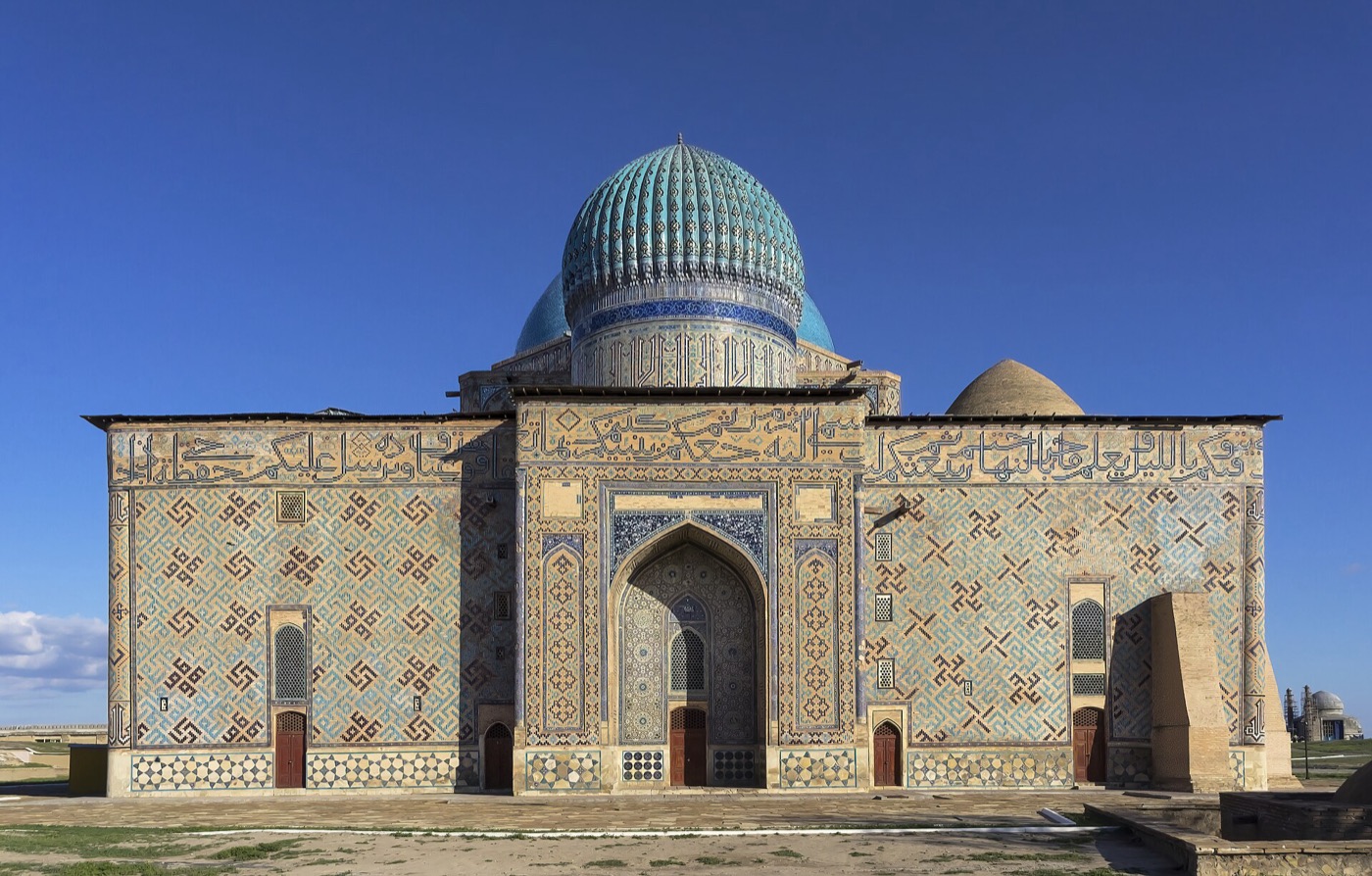
Turkestan is Kazakhstan's spiritual capital. Its centrepiece is the Mausoleum of Khoja Ahmed Yasawi, a twelfth-century Sufi poet; the monumental building was commissioned by Timur in the late fourteenth century and is a UNESCO World Heritage site. Its blue tiled dome and unfinished front portal, with the scaffolding holes still visible, are unforgettable.
Nearby, the ruins of Otrar are what remains of a flourishing Silk Road city, famous in history because the governor's execution of Mongol envoys in 1218 triggered Genghis Khan's invasion of Central Asia. Today the mounds are quiet and windswept, with excavated walls and foundations.
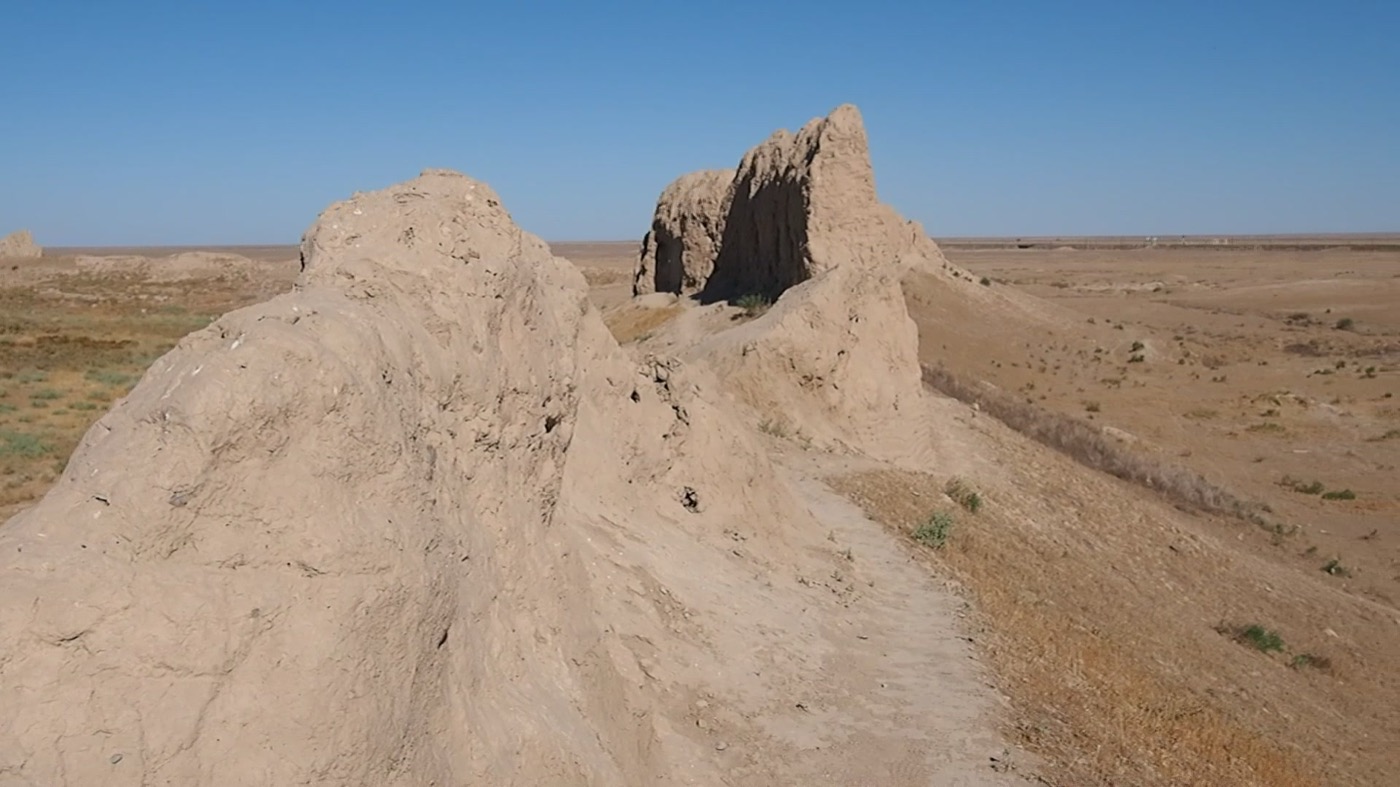
Sauran, north-west of Turkestan, is a ruined medieval town with high clay walls still standing in the open steppe. Standing on its walls at sunset is one of the most atmospheric moments in the country.
The story
Khoja Ahmed Yasawi lived in the twelfth century and wrote poetry in the Turkic language, which helped spread Sufi ideas across the steppe. His collection of wisdom poems, the Divan-i Hikmet, is still read today.
Inside the mausoleum stands the Taikazan, an enormous bronze cauldron cast in the fourteenth century. It was taken to the Hermitage in Leningrad in the Soviet period and returned to Turkestan in 1989, an event many locals still remember.
Pilgrims traditionally first visit the mausoleum of Arystan Bab, Yasawi's teacher, near Otrar, before coming to Turkestan. Otrar is also associated with the great philosopher al-Farabi, born in the region in the ninth century, who was known in the medieval world as 'the Second Teacher' after Aristotle.
At Sauran, archaeologists have found traces of underground irrigation channels that brought water to the town across the dry plain, a reminder of how much engineering it took to keep a medieval city alive in this climate.

Getting there
Fast trains connect Turkestan with Shymkent, Almaty and Astana, and the town now has an airport with flights from the main cities. Otrar and Sauran need a car or a taxi for the day.
The old town around the mausoleum has been heavily restored with a new tourist quarter; walk a little further for local life.
A suggested plan
- Day 1Arrive in Turkestan. Visit the mausoleum in the afternoon and stay for the evening when the building is lit.
- Day 2Morning trip to Otrar and the Arystan Bab mausoleum on the way; afternoon to Sauran for sunset.
- Day 3Market and bazaar, then onward to Shymkent.
Where to stay
Plenty of new hotels around the tourist quarter, from budget to comfortable.
Good to know
- Dress modestly at the mausoleum: covered shoulders and knees; women may want a headscarf.
- Spring is the best season, with green steppe and mild temperatures.
- Try local Turkestan bread and shubat (fermented camel milk).
- Summer temperatures easily exceed 40 °C; avoid midday sightseeing.
- Respect people praying at the shrines; ask before taking photos inside.