Across the Causeway: a day in Johor Bahru
A short ride across the Causeway into Malaysia for old mosques, Chinese temples, a heritage street of coffee shops and cheaper, louder, wonderfully different food.

- Area
- Day trips
- Start from
- Woodlands
- Distance
- about 25 km from the city centre to Johor Bahru
- Time needed
- 1 day
- Best season
- All year; avoid weekends and public holidays when the border is jammed
- Difficulty
- Easy
- Transport
- Causeway Link or SBS bus from Kranji or Queen Street, KTM shuttle train from Woodlands, or the new RTS Link once running
- Tickets & rules
- Passport; check Malaysia's entry rules and the online arrival card before you go
Why go
Johor Bahru lies just across a narrow strait from Singapore, and crossing it is the easiest way to feel how different two neighbours can be. JB, as everyone calls it, is busier, scruffier and cheaper, with traffic, street food, old markets and heritage buildings that are slowly being restored.
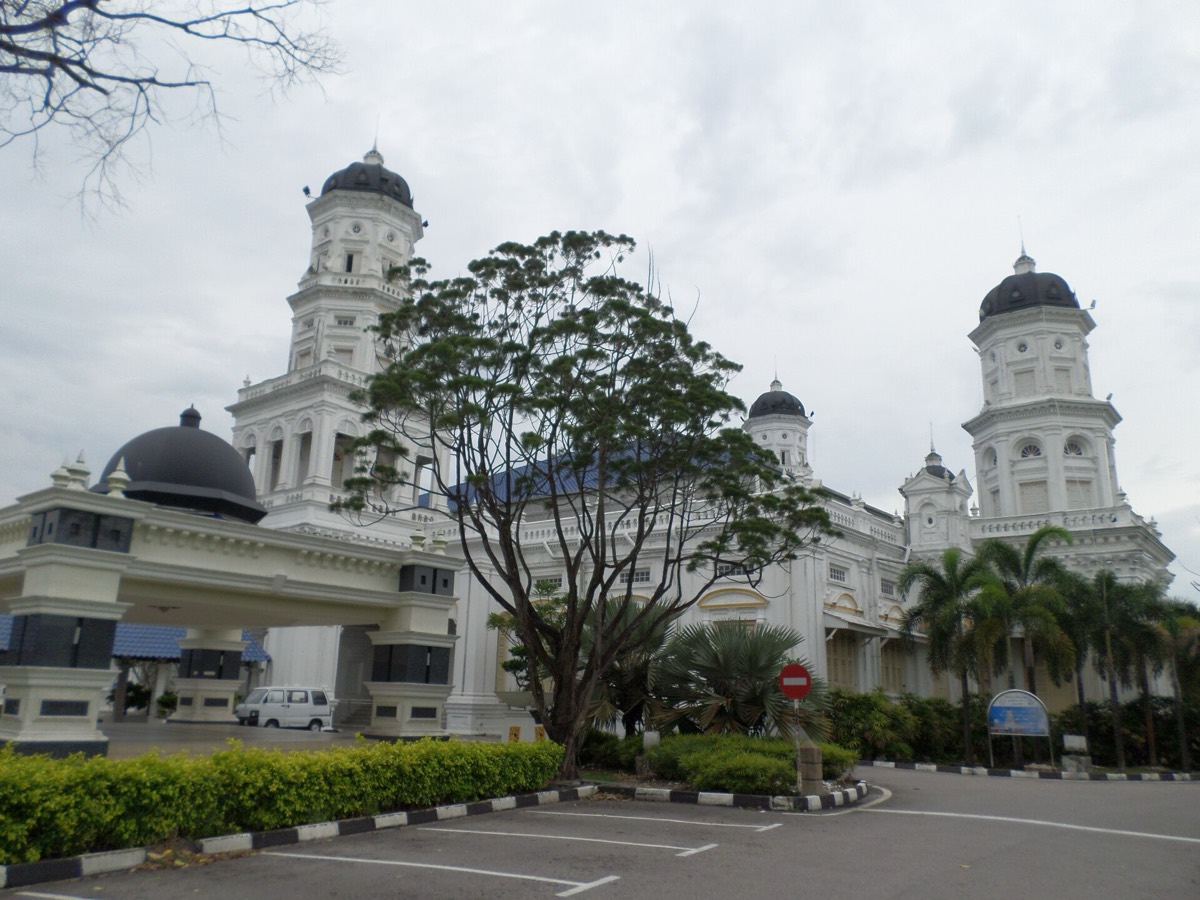
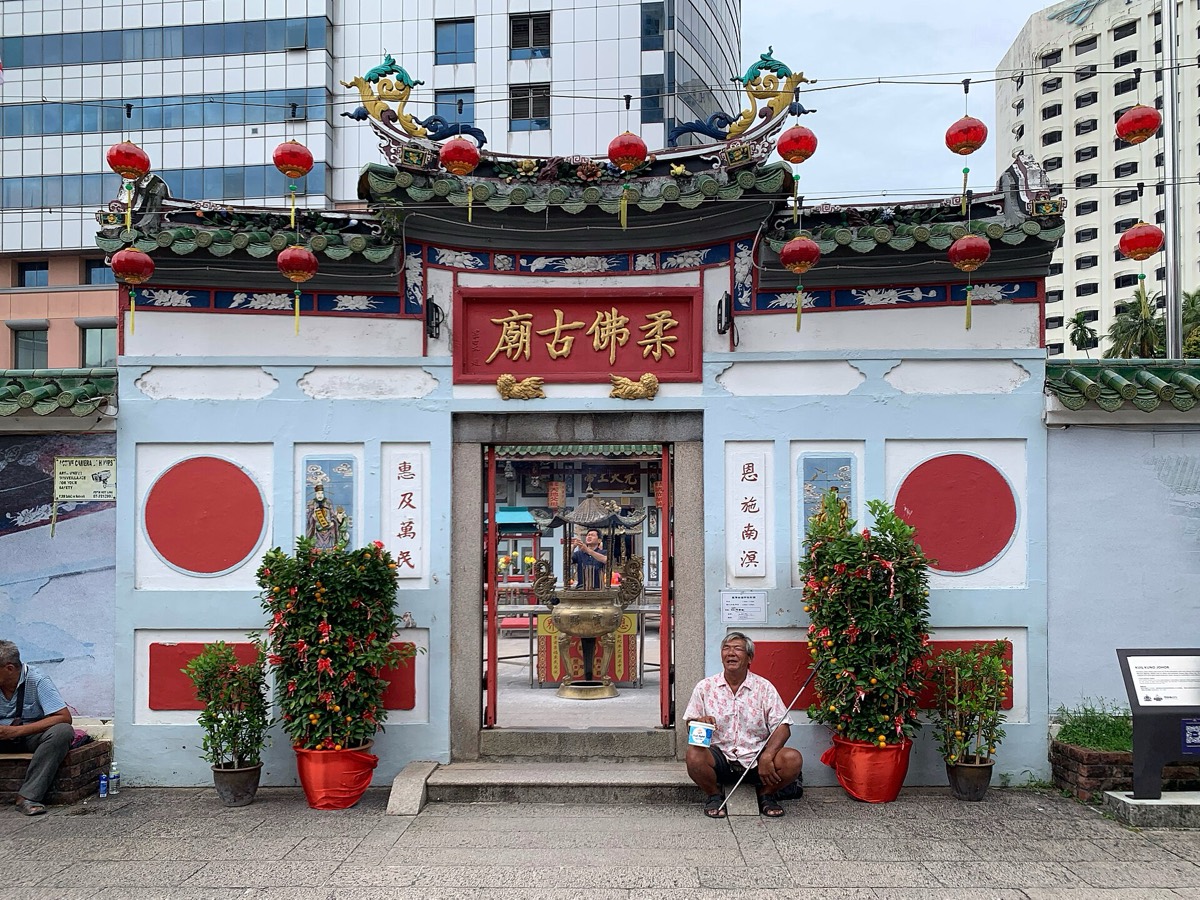
The old town is compact and walkable. On a hill overlooking the strait stands the Sultan Abu Bakar State Mosque, with its white minarets and a mix of Victorian and Moorish styles. Below it, the Istana Besar, the grand royal palace, has gardens open to the public. In the streets of the old town, the Johor Bahru Old Chinese Temple, the Sikh gurdwara and several Hindu temples are only a short walk or ride apart; the mirror-lined 'glass temple' is a short taxi hop away.
I like to end the day on Jalan Tan Hiok Nee, a street of restored shophouses and old-fashioned coffee shops, drinking a strong kopi and eating toast with kaya, coconut jam, before the evening queue at the border.
The story
Modern Johor Bahru was founded in the mid-19th century by Temenggong Daeng Ibrahim and developed by his son, Sultan Abu Bakar, who is known as the father of modern Johor. Abu Bakar was a well-travelled, cosmopolitan ruler who modernised the state's administration and built many of the landmarks that still stand today.
Much of Johor's 19th-century wealth came from pepper and gambier plantations run by Chinese settlers under the kangchu system, in which river settlements were leased to Chinese headmen. Jalan Tan Hiok Nee is named after one of these headmen, and the Old Chinese Temple was built by the five main Chinese dialect groups together.
The Causeway, opened in 1924, carries road and rail across the strait, and today it is one of the busiest land border crossings in the world, with hundreds of thousands of people crossing each day, many of them Malaysians working in Singapore. A rapid transit link between Woodlands and Bukit Chagar in JB has been built to ease the jams, due to start service around the end of 2026.
Every year the Chingay parade, a Chinese festival held in honour of local deities, fills the streets of the old town with floats, lion dances and processions of the five dialect groups' gods.

Getting there
Causeway Link buses run from Kranji MRT and from Queen Street in Bugis to the Woodlands checkpoint, where you get off, clear Singapore immigration, get back on and cross to the Malaysian checkpoint at JB Sentral. The KTM shuttle train from Woodlands to JB Sentral takes only a few minutes but needs advance tickets. Once the RTS Link opens, it will be the fastest option.
From JB Sentral, the old town and mosque are within walking distance.
A suggested plan
- 8:00 amCross early, before the traffic builds; clear both checkpoints and walk out of JB Sentral.
- 9:00 amBreakfast of kopi and kaya toast in an old coffee shop.
- 10:00 amWalk to the Old Chinese Temple and the heritage streets.
- 11:30 amVisit the Sultan Abu Bakar State Mosque and the gardens of the Istana Besar.
- 1:00 pmLunch on Malaysian food in a hawker centre or a local restaurant.
- 4:00 pmReturn through the checkpoints before the evening rush.
Where to stay
It is easy as a day trip; if you want to stay longer, JB has many hotels at much lower prices than Singapore.
Good to know
- Check current entry rules for Malaysia, including the online arrival card required for foreign visitors.
- Change a small amount of Malaysian ringgit or use a card; many places take e-wallets.
- Avoid crossing on Friday evenings, weekends and holiday eves.
- Keep your passport handy at all times; you will need it on both sides.
- Queues at the border can last hours at peak times.
- Snatch theft has been a problem in JB; keep bags close and phones out of reach of passing motorbikes.
- Do not carry anything on behalf of strangers across the border; customs rules on both sides are strict.