Kuah: Eagle Square, the mosque and the waterfront
The island’s small capital, where a giant eagle guards the harbour, a white mosque rises over the water and ferries come and go from the mainland.

- Area
- Kuah & the south
- Start from
- Kuah jetty
- Distance
- about 3 km on foot along the waterfront
- Time needed
- half a day
- Best season
- All year; mornings and late afternoons are coolest
- Difficulty
- Easy
- Transport
- On foot; short taxi rides
- Tickets & rules
- None; modest dress and a robe, often provided, for the mosque
Why go
Most visitors pass through Kuah on the way from the ferry and never look back, which is a pity. The town is unpretentious and practical, with banks, markets, shops and duty-free malls, but its waterfront has a few things worth a slow morning.
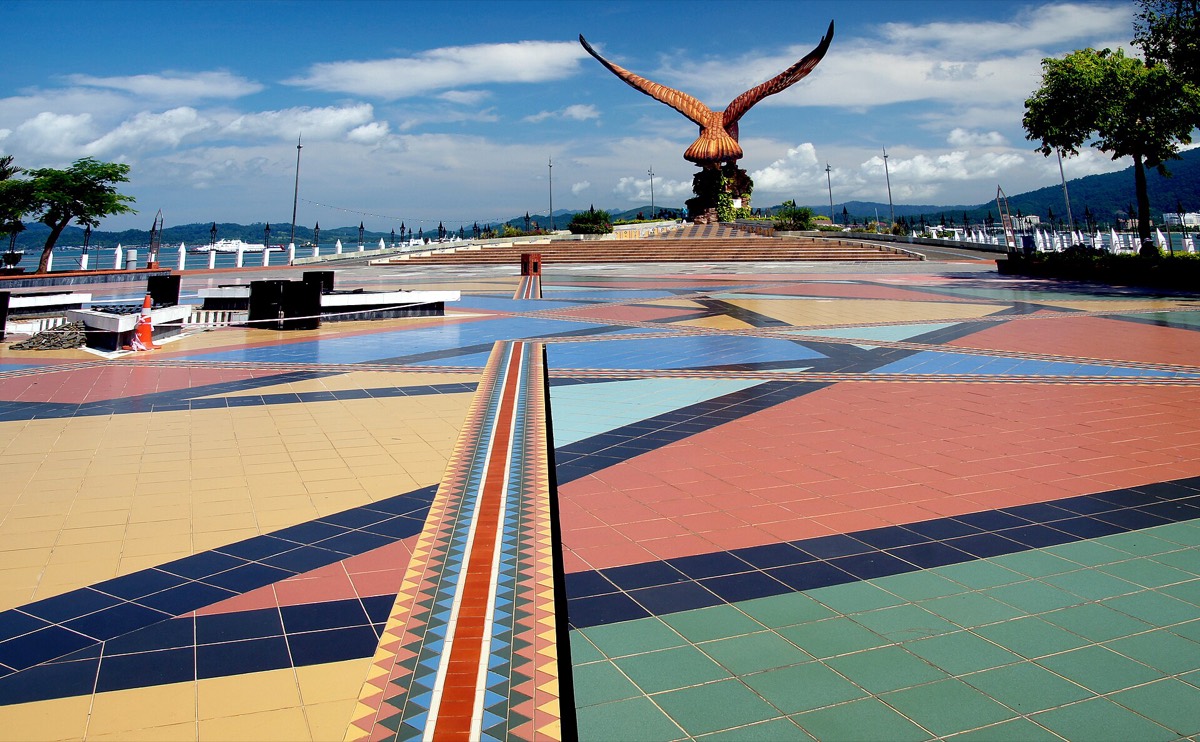
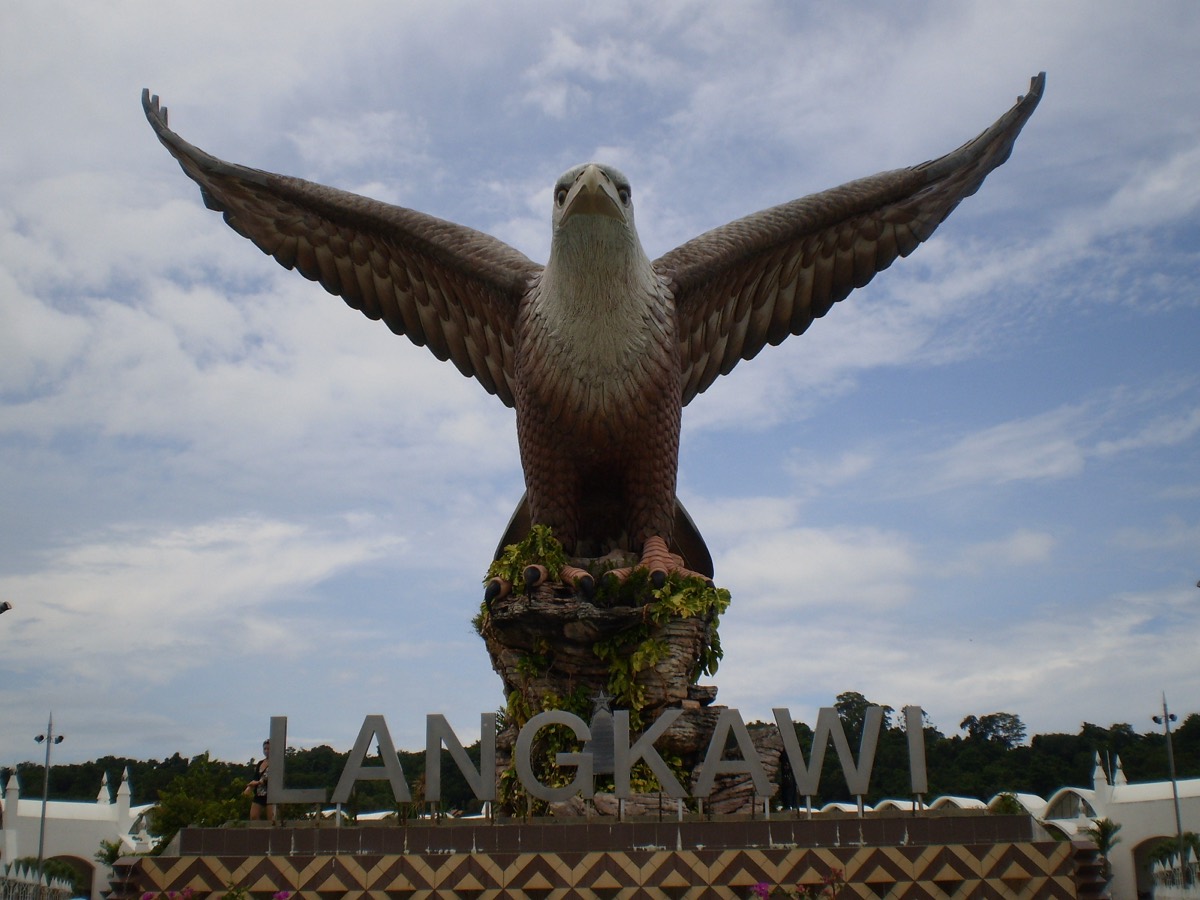
At the end of the jetty area stands Dataran Lang, Eagle Square, with a huge reddish-brown eagle sculpture poised as if about to take off over the bay. Early in the morning, before the tour buses, it is surprisingly peaceful, with fishermen’s boats moving in the harbour and the islands of the south lined up across the water.
From there a promenade leads past Lagenda Park, a landscaped garden with sculptures telling Langkawi’s legends, toward Masjid Al-Hana, Kuah’s main mosque, white and gold with slim minarets. In the late afternoon light it is one of the loveliest buildings on the island.
The story
The name Kuah means ‘gravy’ in Malay, and in the legend of the two giants this is where the pot of gravy spilled during the wedding fight. Locals tell the story with a grin, and it is the reason a plain harbour town has one of the most memorable names in Malaysia.
Kuah grew as a small trading and fishing settlement facing the mainland. Its real expansion came after 1987, when Langkawi was declared a duty-free zone, and the government built the jetty complex, roads and shopping centres to bring in visitors and trade.
The eagle statue was built in the 1990s as a symbol of the island, linked to the popular idea that the name Langkawi comes from helang, the eagle. It has since become the most photographed landmark on the island.
Masjid Al-Hana dates from the late 1950s and mixes Malay and Middle Eastern architectural ideas, with domes and arched windows. Visitors are generally welcome outside prayer times if dressed appropriately.

Getting there
Kuah jetty is the arrival point for ferries from Kuala Perlis, Kuala Kedah and Penang. From the airport or Pantai Cenang it is around 30 minutes by taxi.
Within Kuah, the waterfront is easy to walk; for the shops and markets in the town centre, a short taxi ride saves time in the heat.
A suggested plan
- Early morningEagle Square in soft light, before the crowds.
- MorningWalk through Lagenda Park along the water.
- Late morningVisit Masjid Al-Hana outside prayer times.
- LunchEat at a local restaurant in town.
- AfternoonBrowse the duty-free shops or the town market.
Where to stay
Kuah has many mid-range hotels and is practical for ferries and the east side of the island, though evenings are quieter and less scenic than at Pantai Cenang.
Good to know
- Come early; the square gets hot and busy by mid-morning.
- Dress modestly for the mosque; scarves and robes are often provided.
- Kuah is cheaper for daily shopping than the beach areas.
- Combine with the jetty if you are leaving by ferry.
- Midday heat on the open square is intense.
- Avoid visiting the mosque during Friday midday prayers.