A rainy day: the Islamic Arts Museum and the National Mosque
Turquoise domes, a reconstructed Ottoman room, astonishing manuscripts, and next door a modernist mosque roofed like a folded umbrella.

- Area
- Green KL
- Start from
- Central Kuala Lumpur
- Distance
- walking distance, about 1.5 km
- Time needed
- half a day
- Best season
- All year; perfect for wet afternoons
- Difficulty
- Easy
- Transport
- Grab, or walk from Pasar Seni or KL Sentral
- Tickets & rules
- Museum ticket; mosque open to visitors outside prayer times, robes provided
Why go
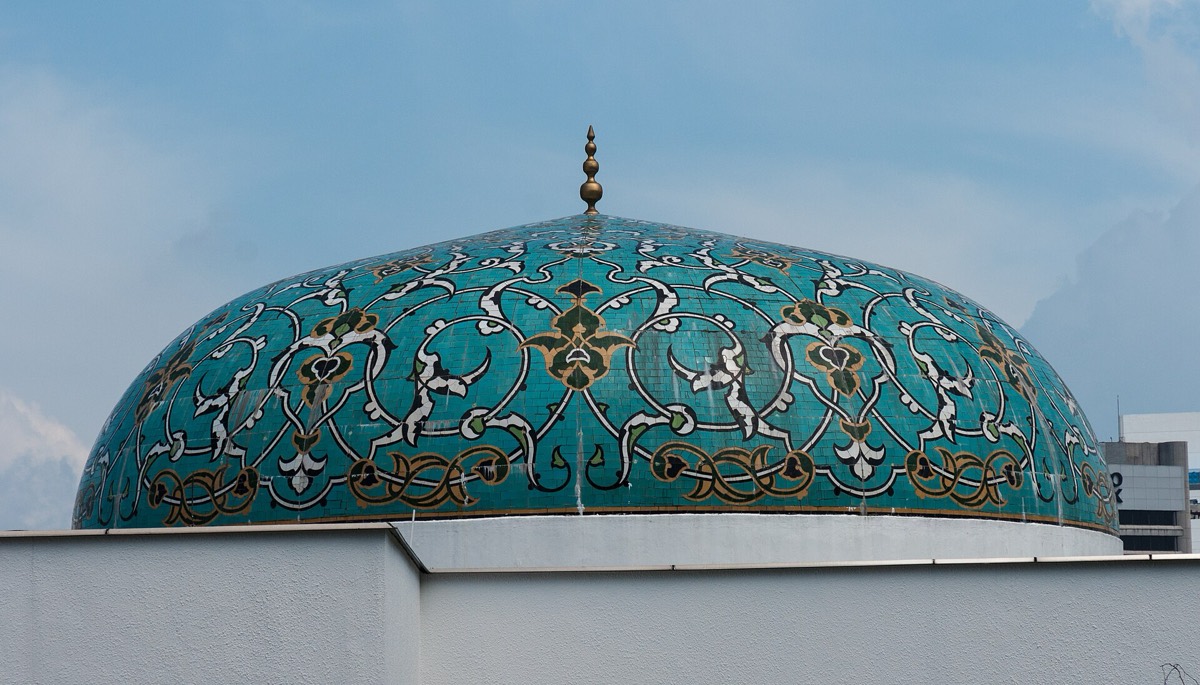
When the afternoon rain sets in, this is where I go. The Islamic Arts Museum Malaysia is one of the best museums in Southeast Asia, and one of the most beautiful: cool white halls under five domes, the largest of them tiled in turquoise and blue inside like the night sky.
The collection spans the whole Islamic world, from Spain to China. There are illuminated Qurans, delicate Mughal jewellery, Persian ceramics, Chinese calligraphy, Malay woodcarving, and a whole gallery of models of the world’s great mosques. The reconstructed Ottoman Syrian room, its walls covered in painted and carved wood, is one of my favourite rooms anywhere.
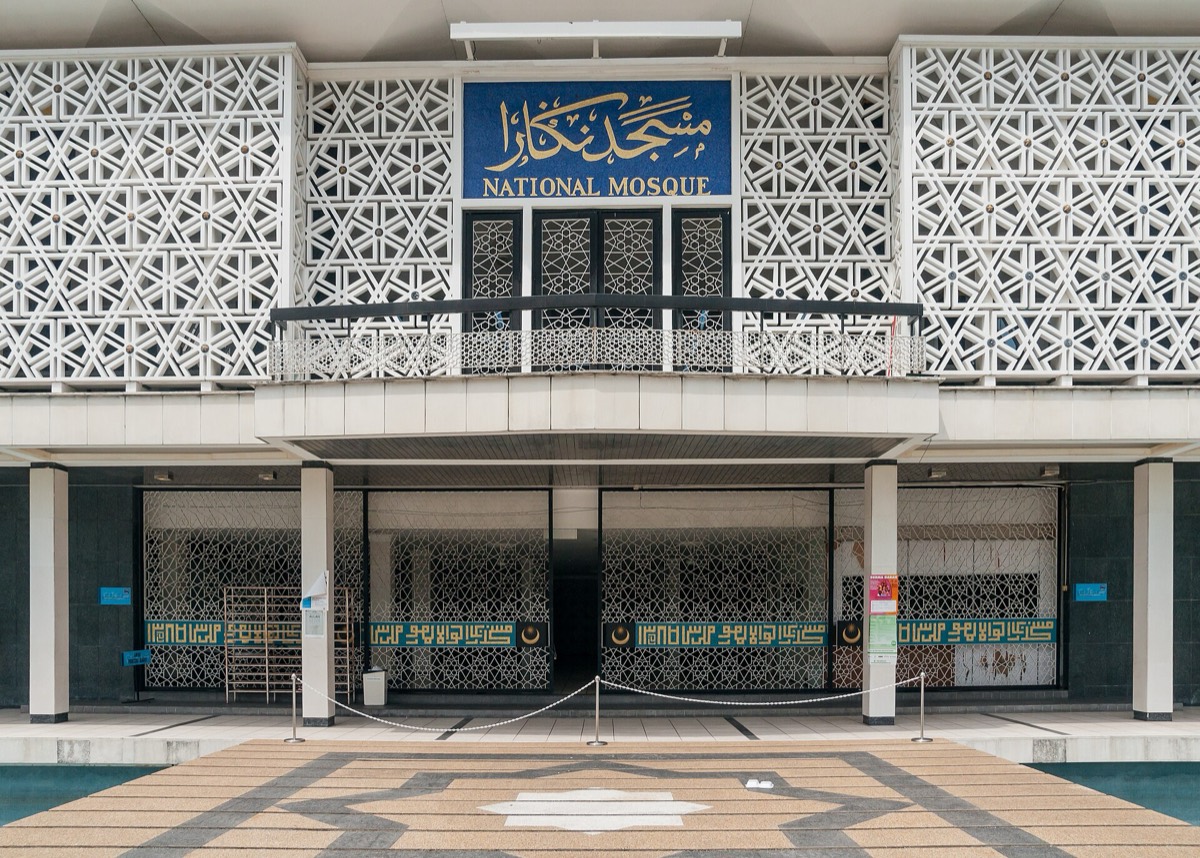
Next door, the National Mosque, Masjid Negara, is open to visitors outside prayer times. Its roof, with eighteen folded points like a half-opened umbrella, its pools and its slender minaret make it a calm, airy example of 1960s modernism.
The story
The museum opened in 1998 with the support of a private foundation. Its building combines Islamic architectural elements with the region’s modern style: craftsmen from Iran and Central Asia are said to have worked on the domes and tilework, and the entrance glitters with Persian-style tiles.
The National Mosque was completed in 1965, shortly after independence, and was designed by a team including the British architect Howard Ashley and the Malaysian architects Hisham Albakri and Baharuddin Kassim. The eighteen points of the star-shaped roof are often said to symbolise the thirteen states of Malaysia and the five pillars of Islam. The minaret is about 73 metres tall.
Just across the road stands the old Kuala Lumpur Railway Station, completed in 1910 and designed by A.B. Hubback, with domes and chhatris that look like a palace. Legend says its roof was built to support a metre of snow because it followed British railway standards; it’s a story that may not be true but that every guide loves to tell.

Getting there
From Pasar Seni LRT station or Chinatown it’s a 10–15 minute walk across a pedestrian bridge; from KL Sentral it’s a short Grab ride. The museum and mosque are side by side, and the Perdana Botanical Gardens are just uphill.
A suggested plan
- 10:00Open the day at the Islamic Arts Museum; start on the upper floor with the architecture gallery.
- 12:00Lunch at the museum’s restaurant.
- 13:30Browse the museum shop and the library of fine books.
- 15:00Visit the National Mosque outside prayer times, wearing the robes provided.
- 16:00Walk past the old railway station for photographs.
Where to stay
Chinatown and KL Sentral are both close, ideal for a rainy-day plan without long journeys.
Good to know
- Allow at least two to three hours for the museum.
- The mosque is closed to tourists during prayers, especially on Friday at midday.
- The museum shop sells beautiful books and textiles.
- Bring socks; mosque floors can be hot or wet.
- Dress modestly; robes and scarves are lent at the mosque, but arms and legs should be covered.
- Respect worshippers; don’t walk in front of people praying or photograph them closely.