By Train on the Laos–China Railway
A fast, modern train that turned a long mountain road into an hour’s ride, threading tunnels and bridges between Vientiane, Vang Vieng and Luang Prabang.

- Area
- Journeys & overnights
- Start from
- Vientiane railway station
- Distance
- about 130 km to Vang Vieng
- Time needed
- 1 day
- Best season
- Year-round; book ahead at holidays
- Difficulty
- Easy
- Transport
- Train, plus tuk-tuk or minivan to and from the stations
- Tickets & rules
- Passport required to buy tickets and board
Why go
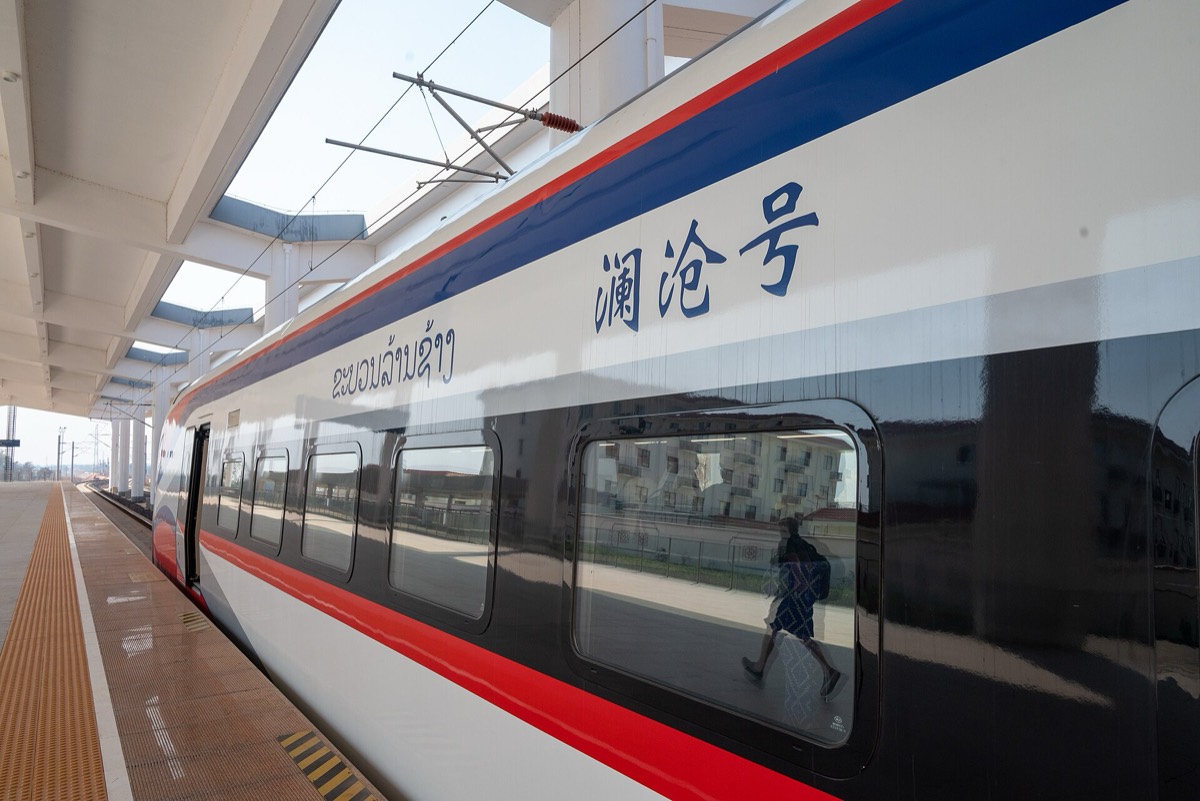
For many years, the trip from Vientiane to Vang Vieng meant a bumpy minivan ride on the winding Route 13, and Luang Prabang was a long day further. The Laos–China railway changed all that. Today the train glides from the capital to Vang Vieng in about an hour, and on to Luang Prabang in a couple of hours more.
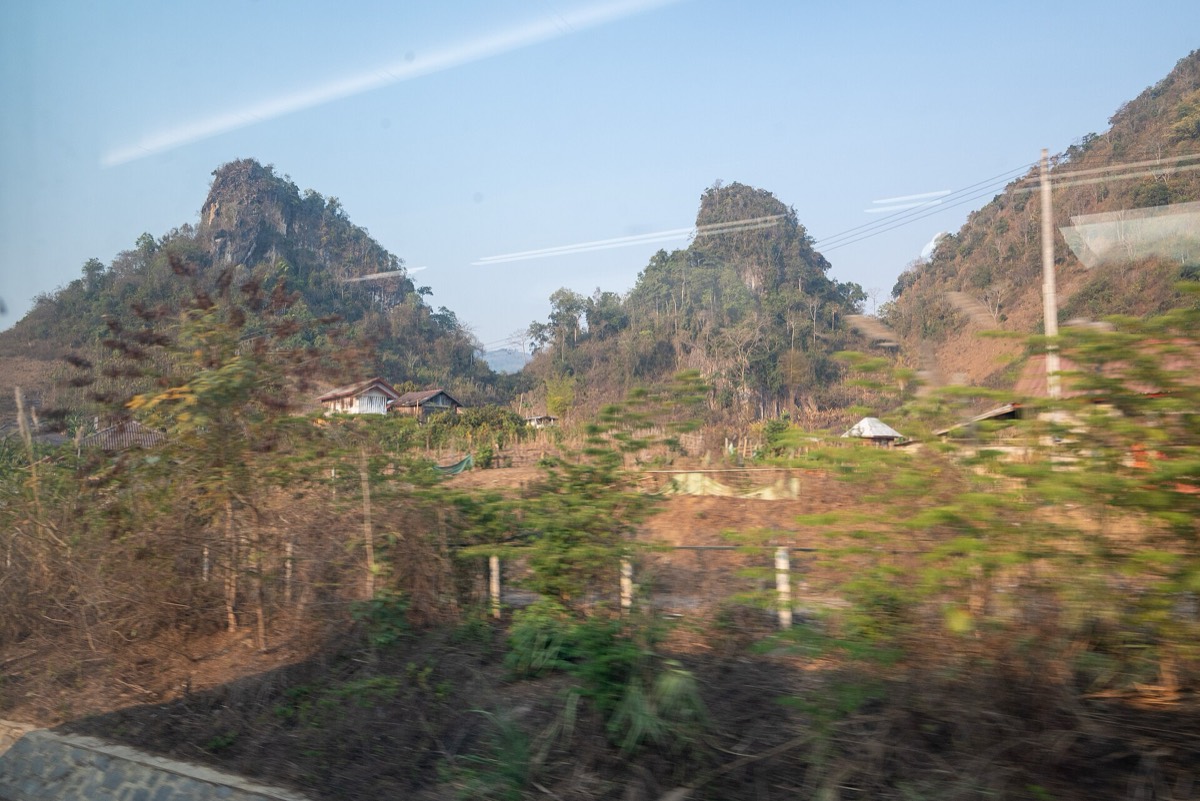
It is a pleasure in itself. The carriages are clean, air-conditioned and quiet, and the line runs through a landscape of rice fields, rivers and karst. Long stretches are in tunnels, but when the train emerges you get glimpses of mountains and villages far below.
For a slow traveller, the train makes it possible to do Vang Vieng as an easy trip from Vientiane, or to string together Vientiane, Vang Vieng and Luang Prabang without long road journeys.
The story
The railway opened in December 2021, linking Vientiane with the Chinese border at Boten, a distance of more than 400 km, and from there to Kunming in southern China. It was one of the largest infrastructure projects in the country’s history, built through steep mountains with dozens of tunnels and long bridges.
Until then, Laos had almost no railway at all, apart from a short line across the Friendship Bridge from Thailand. In colonial times the French built a short line around the Khone Falls in the far south to carry boats past the rapids, and its rusting locomotive still sits there.
The new stations are large and modern, often a few kilometres outside the towns they serve, and they have become a sight in their own right. Lao families come to watch the trains and take photos on the platforms.
In 2023 international passenger trains began running across the border to China, and the railway has become a major route for both travellers and goods. For many Lao people, it has made it far easier to visit family and travel within their own country.

Getting there
Vientiane station is outside the city, about half an hour by road from the centre. Shared vans and taxis run from the centre to the station. In Vang Vieng, the station is a few kilometres from town, and minivans or tuk-tuks meet the trains.
Tickets can be bought at stations, through the official ticketing app, or through agencies. Trains fill up at weekends and holidays, so buy a few days ahead.
A suggested plan
- 7:30Take a shared van or taxi from central Vientiane to the station.
- 8:30Pass security and wait in the large, airy station hall.
- 9:00Board the train and watch the landscape change from plains to karsts.
- 10:00Arrive in Vang Vieng and take a van or tuk-tuk into town.
- 10:30Check in and walk down to the river for lunch.
Where to stay
In Vientiane stay in the centre; in Vang Vieng, choose a guesthouse near the river and arrange transport from the station.
Good to know
- Bring your passport; it is checked when buying tickets and boarding.
- Arrive at the station well ahead; security checks resemble those at airports.
- Some items, such as flammable liquids, are not allowed on board.
- Window seats on the left side heading north often give good views, but tunnels are frequent.
- Tickets can sell out at holidays; do not count on buying them at the last minute.
- Agree on the fare with drivers at the stations before setting off, or use shared vans with fixed prices.