Sunrise at Ho Quoc pagoda
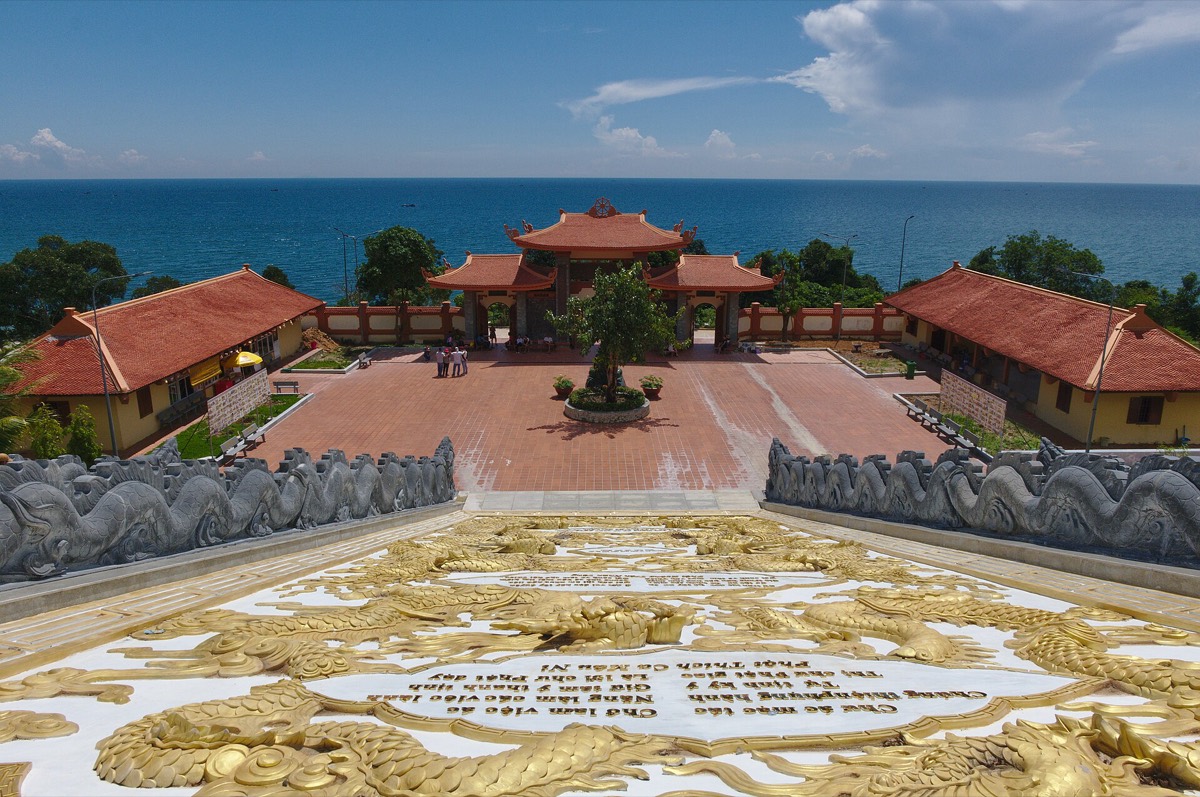
A large modern Buddhist monastery on a hillside facing the morning sun, with sea views, temple bells and very few people at dawn.

- Area
- East coast & interior
- Start from
- Duong Dong
- Distance
- about 25 km
- Time needed
- half a day
- Best season
- All year; clearer mornings November – April
- Difficulty
- Easy
- Transport
- Taxi or scooter
- Tickets & rules
- Free; temple dress code (cover shoulders and knees)
Why go
On the east coast of Phu Quoc, near Bai Vong, the Ho Quoc pagoda sits on a slope above the sea, its halls and gates rising in terraces up the hillside. At sunrise the sun comes up over the water in front of it, lighting the roofs gold and casting long shadows across the courtyards.
Inside, monks chant and bells ring while early visitors light incense. Outside, you can walk along the terraces, look out over the coastline and down to the rocks where waves break below.
It’s a peaceful place to start the day, especially if you’ve had enough of beaches and bars.
The story
Ho Quoc pagoda, formally Thiền viện Trúc Lâm Hộ Quốc, is a relatively new monastery, inaugurated in 2012. It belongs to the Trúc Lâm Zen tradition, which traces its roots to the thirteenth-century King Trần Nhân Tông, who abdicated and became a monk, founding a uniquely Vietnamese school of Zen Buddhism.
The name ‘Hộ Quốc’ means ‘protecting the nation’, and the pagoda’s position at Vietnam’s far southwestern edge was chosen with that symbolism in mind. Like other Trúc Lâm monasteries built in recent decades, it combines traditional architecture with modern construction, and it serves both as a place of practice and as a cultural landmark.
The halls are decorated with carvings, statues and paintings of Buddhist figures, and there are bells and drums used in daily rituals. Despite its size, the monastery is surprisingly quiet in the early morning, before tour groups arrive.
The area around the pagoda is also part of Phu Quoc’s quieter east coast, where small fishing hamlets and pepper gardens still dominate. A visit here gives a sense of the island’s spiritual life and its long, complicated relationship with the sea.
Getting there
From Duong Dong, drive east across the island towards Bai Vong and the east coast, following signs to the pagoda. It takes about 30 to 40 minutes by car or scooter.
For sunrise, you’ll need to leave in the dark; arrange a taxi in advance or check your scooter’s lights and fuel the day before.
A suggested plan
- 5:00Leave Duong Dong or Long Beach in the dark.
- 5:40Arrive and climb the steps to the main hall as the sky begins to brighten.
- 6:00Watch the sunrise over the sea from the terraces; listen to the morning chanting.
- 6:45Explore the halls, gardens and viewpoints before the crowds arrive.
- 7:30Breakfast in a nearby village, then continue to Ham Ninh or a pepper farm.
Where to stay
Most visitors come from Duong Dong or Long Beach. If you want an easy sunrise, consider staying on the east coast for a night or two.
Good to know
- Wear clothes that cover shoulders and knees; some visitors bring a light scarf or sarong.
- Take off shoes before entering halls, and follow signs about photography inside.
- Bring a light jacket; early mornings can be breezy on the hillside.
- Steps and terraces can be slippery after rain.
- Keep noise down during chanting and ceremonies; it is an active monastery.