Mui Ne: the white dunes at sunrise
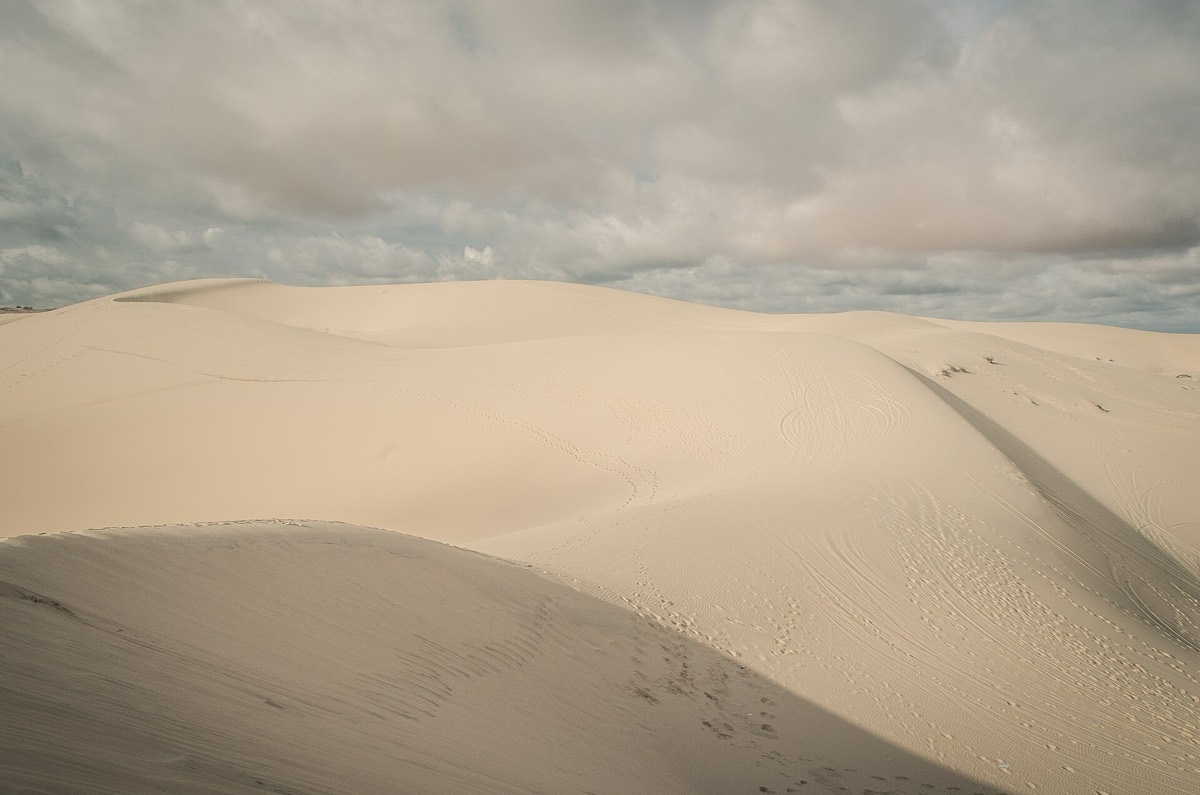
Rolling ridges of pale sand above a lotus lake, lit pink and gold at dawn, and a red dune at sunset where children slide down on plastic sheets.

- Area
- South to Mui Ne
- Start from
- Mui Ne
- Distance
- about 50 km to the white dunes, a few kilometres to the red dunes
- Time needed
- 1–2 days (overnight from Nha Trang)
- Best season
- November – April for wind and clear skies; dry most of the year
- Difficulty
- Easy
- Transport
- Jeep tour, taxi or motorbike from Mui Ne
- Tickets & rules
- Small fees at the dunes; quad bikes and jeeps cost extra
Why go
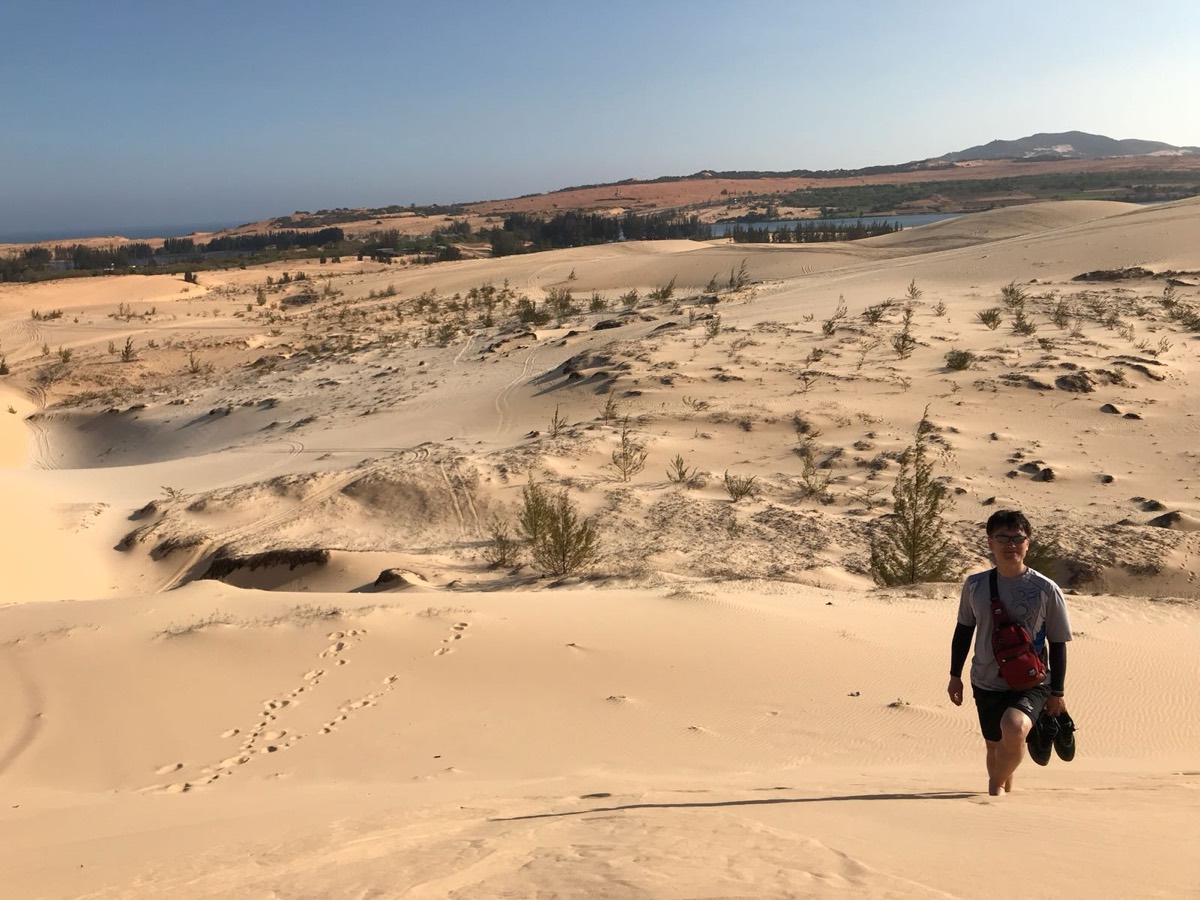
Mui Ne is a long beach of resorts and kite-surfing schools, but its real wonder lies just inland. The white dunes of Bàu Trắng are a small desert of their own, ridge after ridge of fine pale sand stretching away from a freshwater lake fringed with lotus. At sunrise the light rakes across the ripples, and you can walk out of sight of everyone in a few minutes.
The red dunes, closer to the village, are smaller and softer in colour, a warm orange that deepens at sunset. They are the place to sit, watch the sky change over the sea, and let children slide down on plastic sheets.
It is a long way from Nha Trang, so treat it as an overnight or the end of a coastal journey. In return you get a landscape that feels nothing like the rest of Vietnam.
The story
The dunes owe their existence to the wind. For several months each year a strong, steady north-east wind blows down this coast, carrying sand from the beaches inland and piling it into dunes that keep shifting shape. The same wind has made Mui Ne one of the best kite-surfing places in Asia.
The red colour of the dunes near Mui Ne village comes from iron oxide in the sand. The white dunes are made of quartz sand and sit beside freshwater lakes fed by underground water, an unusual combination that has made Bàu Trắng a local attraction for decades.
Mui Ne became famous among travellers after people gathered here to watch the total solar eclipse of October 1995, which crossed this stretch of coast. The first small resorts appeared soon after, and the village grew into a resort strip, but the fishing harbour and the dunes beyond remained much the same.
The dunes have also become a playground for quad bikes and jeeps, and on busy mornings their engines can break the silence. Walking a little away from the main ridges is the best answer.

Getting there
Mui Ne is about 230 km south of Nha Trang, roughly five to six hours by bus or car, or take a train to Phan Thiet and a taxi on from there. Since the 2025 mergers this coast is administratively part of Lam Dong province.
Sunrise jeep tours leave Mui Ne very early, usually around 4:30 am, and take in the white dunes, the red dunes, the fishing village and the Fairy Stream.
A suggested plan
- 4:30Jeep or taxi from Mui Ne to the white dunes.
- 5:30–7:00Sunrise on the dunes; walk away from the crowds.
- 7:30Lotus lake and breakfast at a roadside stall.
- DayRest by the pool, swim or watch the kite surfers.
- 5:00 pmRed dunes for sunset, then seafood in Mui Ne.
Where to stay
Mui Ne’s long beach road has everything from small guesthouses to large resorts. Stay at least two nights if you come from Nha Trang, so the long drive isn’t wasted.
Good to know
- Bring a headtorch and a light jacket for the dawn ride; it can be surprisingly chilly.
- Wear sunglasses and cover your camera; the wind blows sand into everything.
- Walk barefoot on the cool morning sand; by midday it burns.
- Kite-surfing lessons are best from November to April.
- Quad bikes can roll over on steep slopes; ride only with a guide and a helmet.
- Agree tour prices and stops in advance; some drivers try to add charges for ‘extra’ stops.