Hon Mun: snorkelling in Vietnam’s first marine reserve
A boat ride out to a dark, cliff-edged island where coral gardens, parrotfish and giant clams sit a few metres below the surface.

- Area
- Islands & bay
- Start from
- Cau Da pier, Nha Trang
- Distance
- about 10 km by boat
- Time needed
- 1 day
- Best season
- February – August for calm, clear water
- Difficulty
- Easy
- Transport
- Tour boat or chartered boat from Cau Da
- Tickets & rules
- Marine protected area fee, usually included in tours; check current rates
Why go
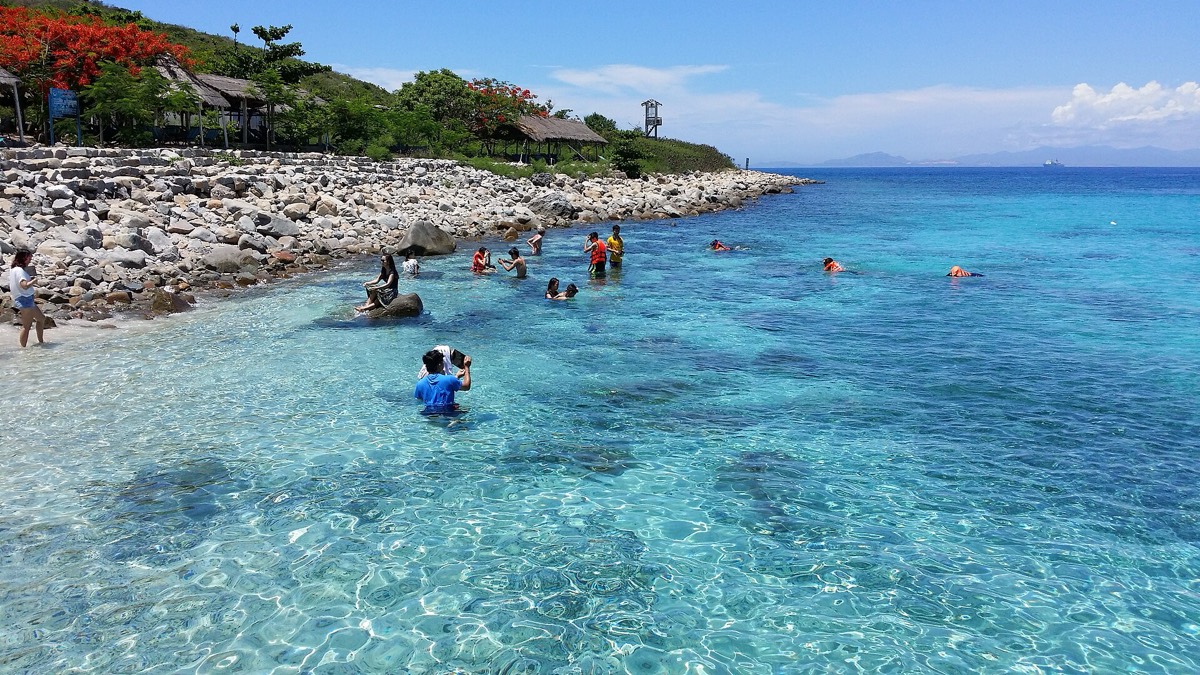
Hon Mun is the island everyone in Nha Trang means when they talk about snorkelling. Its name means ‘Ebony Island’, from the dark rock of its cliffs, and on calm days the water around its sheltered coves turns a clear blue-green over reefs of hard and soft coral. You drift above brain corals and table corals, schools of fusiliers and sergeant majors, and the occasional moray peering out of a crack.
It isn’t a pristine reef. Decades of fishing and tourism have taken their toll, and storms and warm years have bleached some areas. But the protected zones still have colour and life, and for many people it is the first time they have seen a living reef with their own eyes.
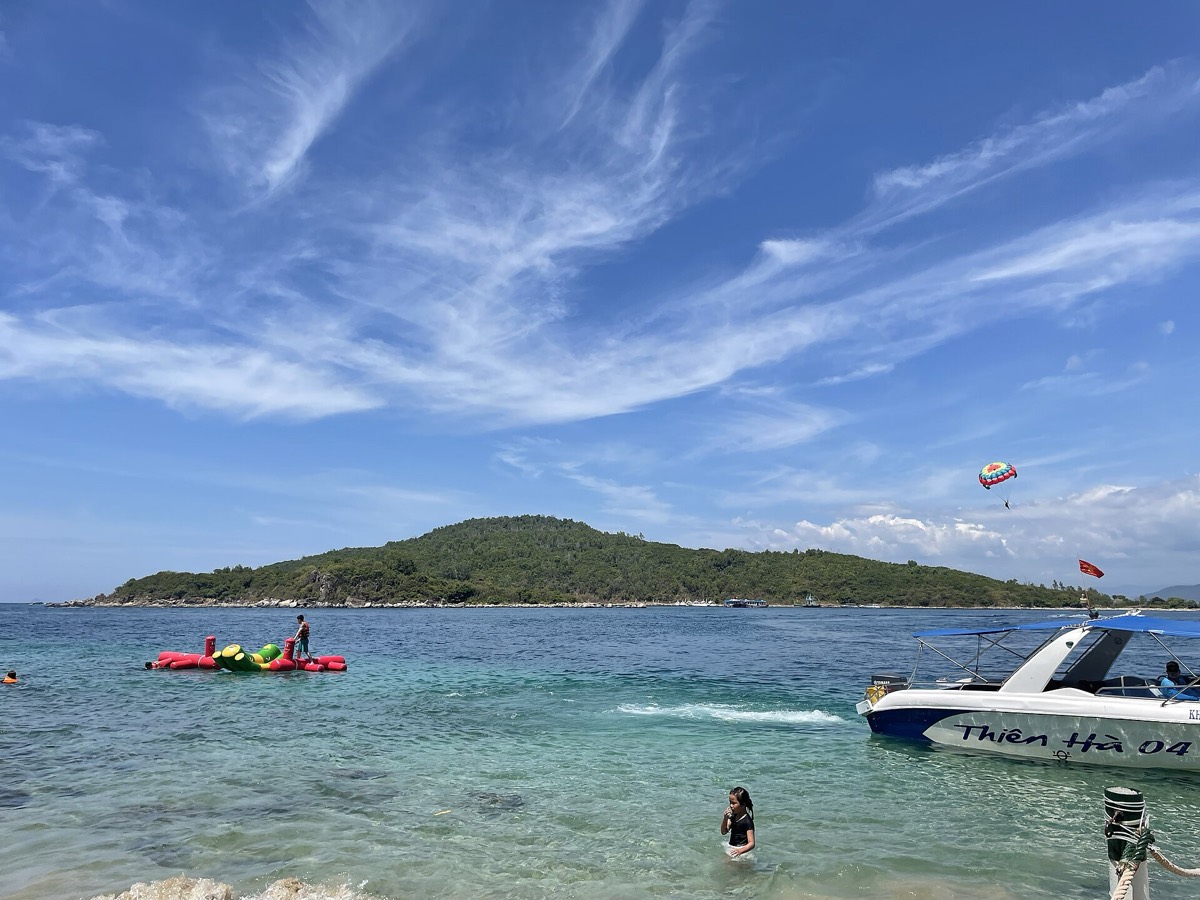
The boat trip is half the pleasure: out past the cable car and the island of Hon Tre, with the mountains of the mainland behind and green islands scattered ahead, and the sea changing colour as the water deepens.
The story
In 2001 the waters around Hon Mun and the neighbouring islands became Vietnam’s first marine protected area, set up with the help of international conservation projects. Scientists had recorded an unusually high number of hard coral species here, among the richest in the country, and the reserve was meant to show that fishing communities and conservation could share the same sea.
The islands of Nha Trang Bay are also famous for something stranger. Cave swiftlets nest in the sea caves on several of them, building cup-shaped nests of hardened saliva high on the rock walls. For centuries the nests were collected by men who climbed bamboo ladders inside the caves, and they were once paid as tribute to the royal court. The nests are still harvested, now under strict control, and you will see them sold in town at extraordinary prices.
Fishing villages still live on some of the islands, and you will pass fish farms floating in the shelter of the bays, wooden walkways linking cages of grouper and lobster. In the early morning, small round basket boats paddle between them.
On a calm day you may also see boats from local dive schools, which run training dives in the reserve; Nha Trang is one of Vietnam’s main places to learn to dive.

Getting there
Most trips leave from Cau Da pier at the southern end of the city in the morning. Shared snorkelling and diving tours include hotel pick-up, the reserve fee, masks and lunch; private boats can be chartered for small groups.
The crossing takes about 30–45 minutes. Choose a tour that explicitly mentions snorkelling time at Hon Mun rather than a party boat with music and drinking.
A suggested plan
- 8:00Pick-up and boat from Cau Da pier.
- 9:00First snorkel at a sheltered cove of Hon Mun.
- 11:00Second site; look for giant clams and anemonefish.
- 12:30 pmLunch on board or on a nearby island beach.
- 2:00Swim or a short beach stop, then back to the pier by mid-afternoon.
Where to stay
Stay in the south of the city, near the southern end of Tran Phu or around Cau Da, to cut down on the morning transfer. The rest of town is only 15–20 minutes away.
Good to know
- Bring reef-safe sunscreen and a long-sleeved rash guard.
- Don’t stand on coral, touch it or feed the fish.
- Morning is clearer and calmer than afternoon, when the wind picks up.
- If you get seasick, sit at the back of the boat and look at the horizon.
- From around September to December the sea is often rough and trips are cancelled; don’t push a boat operator to go out in bad weather.
- Check that life jackets are on board and that guides keep a count of swimmers in the water.