My Son: Cham towers in the jungle
The red-brick temples of a lost kingdom in a green valley under a sacred mountain, best seen at dawn before the heat and the tour buses.

- Area
- Hills & passes
- Start from
- Hoi An
- Distance
- about 40 km
- Time needed
- half a day
- Best season
- All year; February – April is best
- Difficulty
- Easy
- Transport
- Scooter, taxi, tour bus or boat-and-bus tour
- Tickets & rules
- Entrance ticket (around 150,000 VND); dress modestly
Why go
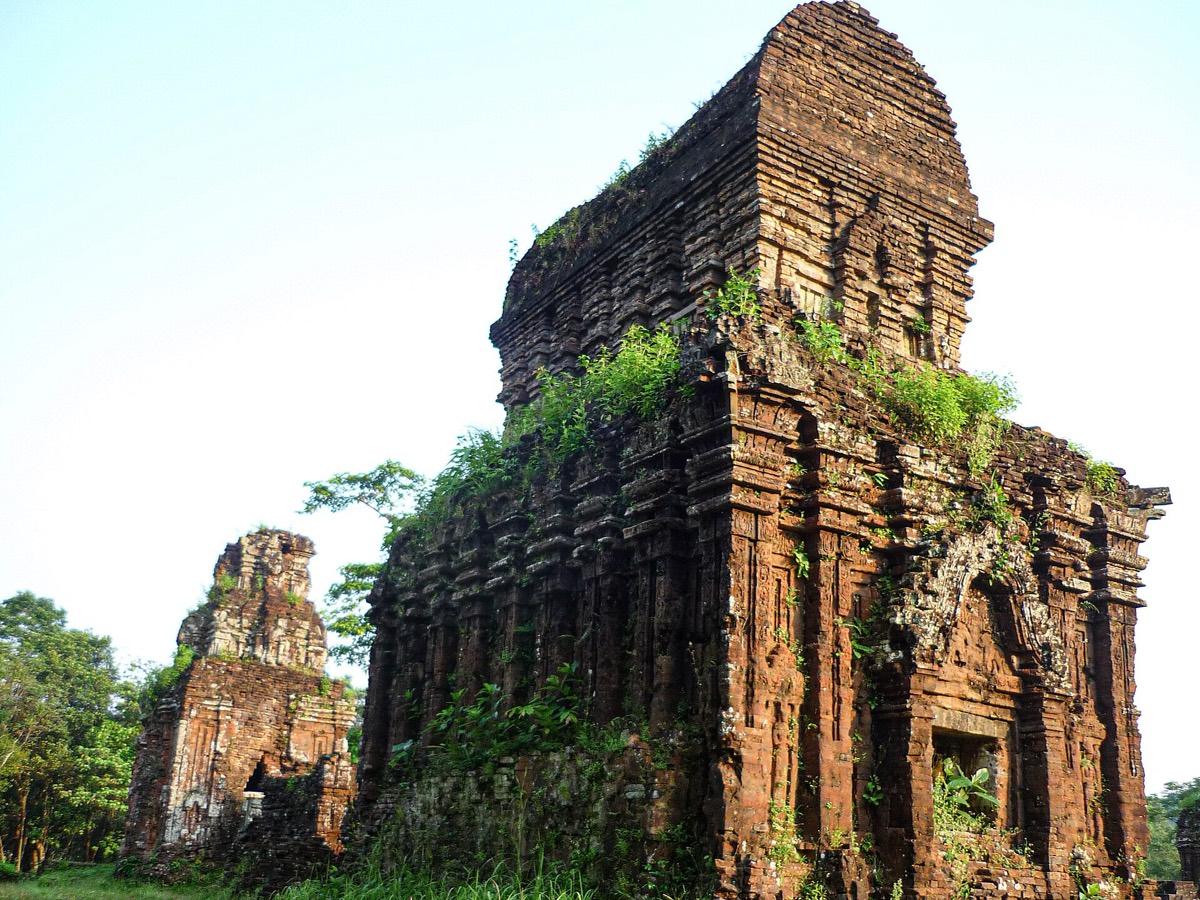
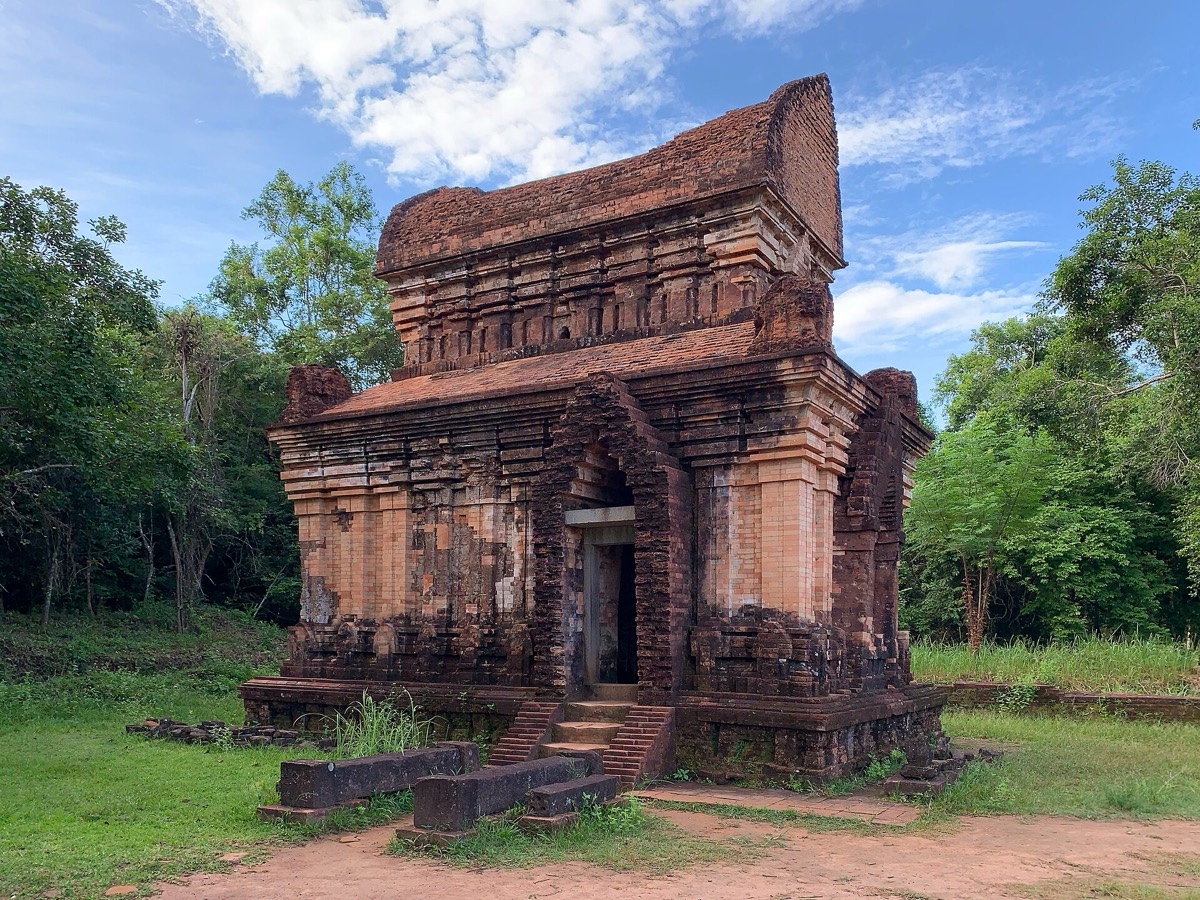
My Son is a valley in the hills west of Hoi An, ringed by forest and dominated by a peak shaped like a cat’s tooth. Hidden in it are the remains of some seventy brick temples built by the Cham over nearly a thousand years. Many are ruined, overgrown or broken by bombs, but the survivors are beautiful: red-brick towers decorated with carvings of dancers, elephants and gods.
It is a place to visit early. Gates open around 6 a.m., and in the first hour there is mist in the valley, birdsong and very few people. By mid-morning the heat builds and the groups arrive.
The site is spread across several groups of temples linked by forest paths. Walk slowly and look closely: the Cham built their temples of brick fitted together without visible mortar, and nobody is completely sure how they did it.
The story
From the 4th century to the 13th, Cham kings built and rebuilt temples here, dedicated mainly to Shiva in the form of a linga. The first temple, built of wood, was dedicated to Bhadresvara, a combination of the name of the king and Shiva. It burned down and was rebuilt in brick.
The Cham kingdom gradually declined as the Vietnamese expanded south, and the valley was abandoned. French researchers rediscovered it in the late 19th century, and the EFEO studied and documented the temples in detail in the early 20th century.
During the American War, the area was a stronghold, and in 1969 it was heavily bombed. The finest group of temples, including a tall tower, was destroyed. Bomb craters remain around the site.
After the war, Polish architect Kazimierz Kwiatkowski led restoration work. He is remembered fondly in Hoi An, where a small memorial to him stands in a garden. My Son was listed by UNESCO in 1999, the same year as Hoi An, and conservation work continues with international help.

Getting there
My Son is about 40 km west of Hoi An, around an hour by road. Many tours leave early; some return by boat on the Thu Bon River.
From the ticket office, an electric shuttle takes you to the temple area, and the rest is on foot.
A suggested plan
- 5:00Leave Hoi An by car or scooter.
- 6:00Arrive at opening time and walk to the main groups B, C and D.
- 7:30Walk to the outer groups and the bomb craters.
- 9:00Visit the small museum near the entrance.
- 10:00Return to Hoi An, or take a boat down the Thu Bon.
Where to stay
Stay in Hoi An; My Son is an easy early-morning trip.
Good to know
- Go early for light and quiet.
- Bring water, a hat and insect repellent.
- Read about Cham history beforehand or visit the Cham museum in Da Nang.
- Wear comfortable shoes for forest paths.
- Stay on marked paths; unexploded ordnance has been found in the region in the past.
- Do not climb the temples.
- Heat can be intense by mid-morning.