Duong Lam, a village of laterite walls
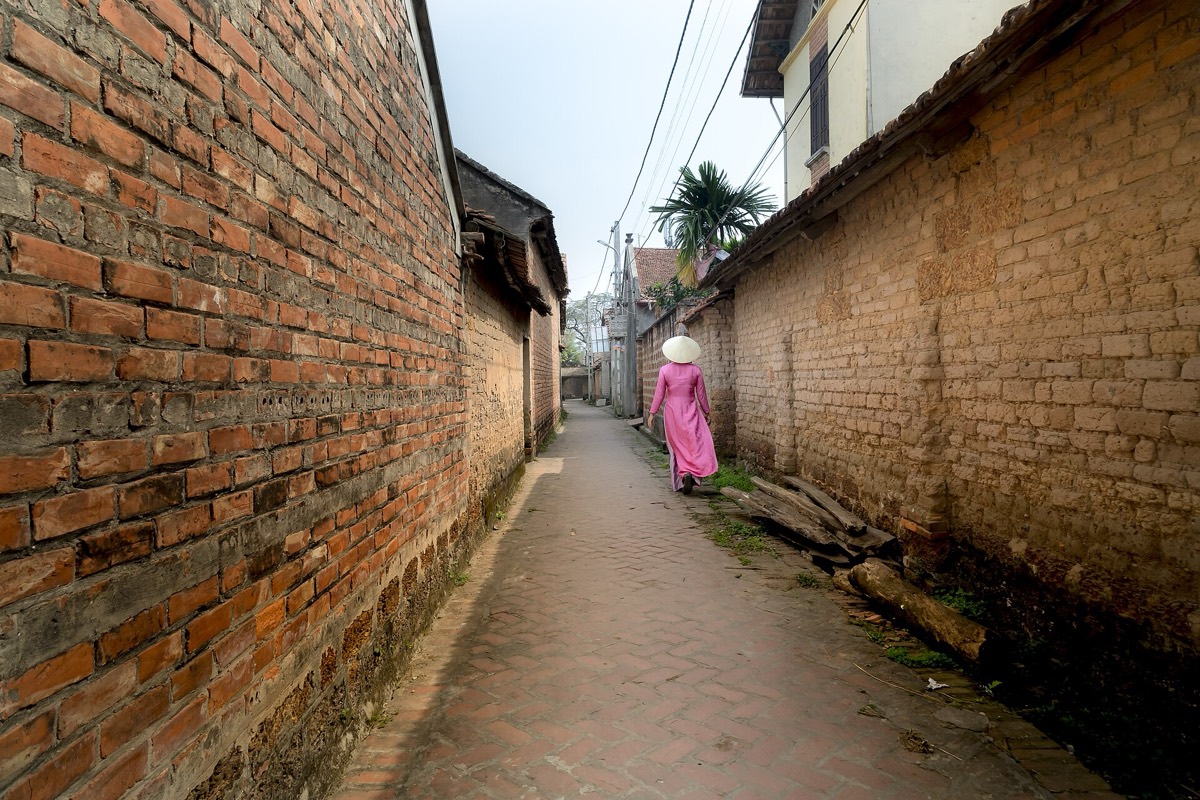
A quiet, ancient village of honey-coloured laterite houses, ancestral halls and rice fields, a world away from the city just an hour and a half away.

- Area
- Ninh Binh & day trips
- Start from
- Hanoi
- Distance
- about 50 km west
- Time needed
- 1 day
- Best season
- All year; October – April is most comfortable
- Difficulty
- Easy
- Transport
- Grab, private car or bus to Son Tay, then bicycle
- Tickets & rules
- Small entrance fee to the village
Why go
Duong Lam is my favourite antidote to Hanoi’s intensity. It is a real village, where people still live, farm and raise children, but its lanes are lined with walls and houses built from blocks of laterite, a reddish-brown volcanic stone, and some of the houses are several centuries old.
You can walk or cycle through it in a few hours, step inside a few old homes, visit the communal house, and eat a simple lunch with a family. There are few tourists on weekdays.
It is gentle, slow and photogenic, especially in the low light of late afternoon.
The story
The village sits near the town of Son Tay at the edge of the delta, and it is known as the land of two kings. Phung Hung, who led a rising against Tang China in the eighth century, and Ngo Quyen, who defeated Chinese forces at the Battle of Bach Dang in 938 and ended a thousand years of Chinese rule, were both born here. Temples dedicated to both stand near the village.
In 2005 Duong Lam became the first village in Vietnam to be recognised as a national historic relic. Inside the village gates are more than a hundred old houses, some dating back more than two hundred years.
Laterite was the local building material: cut from the ground in blocks when soft, it hardens on contact with the air. The result is rough, pitted walls in shades of ochre and rust, laid without mortar.
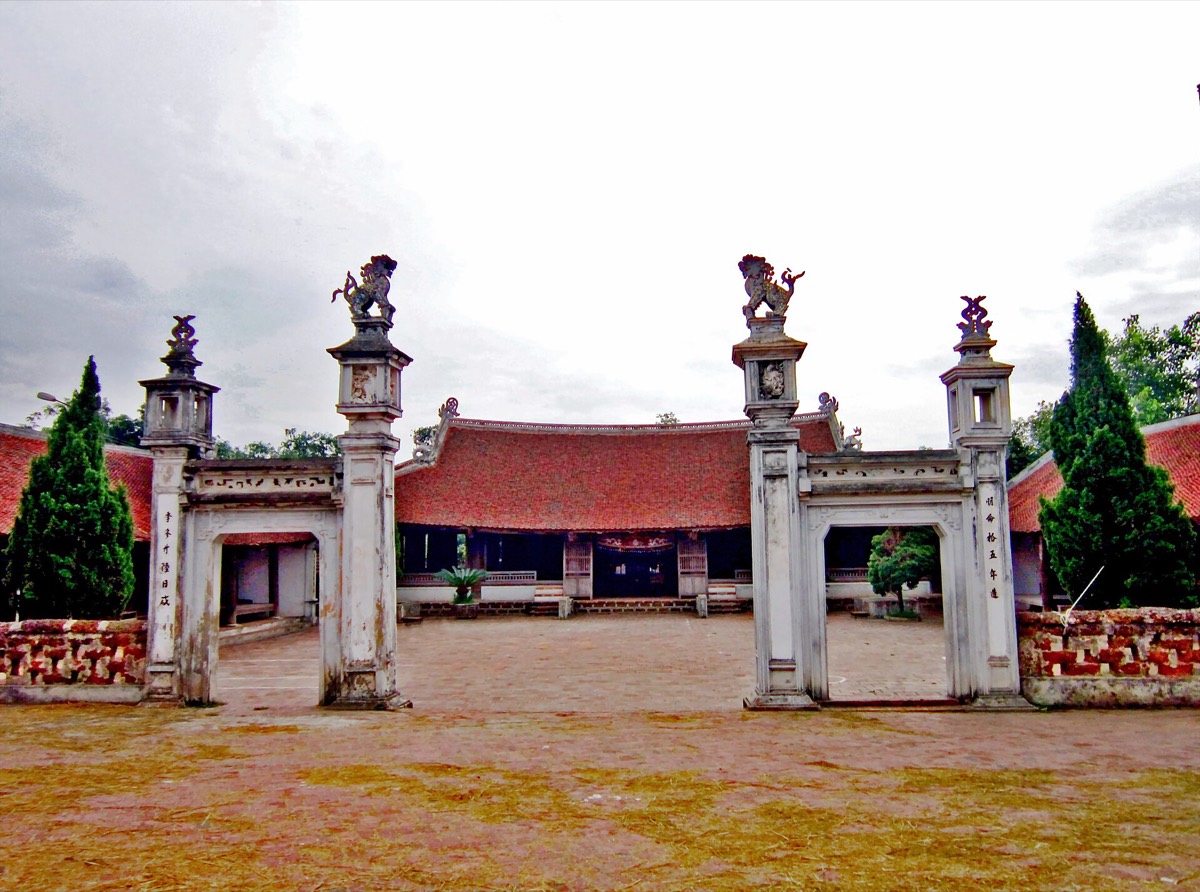
Mong Phu communal house, built in the seventeenth century, is the heart of village life, with a great wooden roof and carved beams. Nearby Mia pagoda holds hundreds of statues. The village is also known for che lam, a sticky sweet made with ginger and peanuts, and keo dua, peanut candy.

Getting there
By car or Grab it takes around 1.5 hours from central Hanoi. Public buses run to Son Tay, from where it’s a short motorbike-taxi ride.
Bicycles can be rented at the village entrance or from homestays.
A suggested plan
- 8:00Leave Hanoi.
- 9:30Arrive at the village gate and rent a bicycle.
- 10:00Mong Phu communal house and a couple of old houses open to visitors.
- 12:00Lunch with a family or at a simple eatery.
- 14:00Mia pagoda and the temples of Phung Hung and Ngo Quyen.
- 16:00Ride through the rice fields in the low light, then return.
Where to stay
A homestay in the village is a lovely option; staying the night lets you see it after day visitors leave.
Good to know
- Families who open their homes usually ask a small fee or hope you’ll buy a souvenir.
- Try the local che lam and keo dua as snacks.
- Bring cash; card payment is rare.
- Ask permission before photographing inside houses.
- Respect private homes; not every open door is an invitation.
- Roads around Son Tay carry trucks; take care if cycling outside the village.