Sentosa beyond the theme parks: forts, beaches and the southern point
Walk across the water to an island of old coastal guns, quiet beaches and a little suspension bridge that leads to the self-styled southernmost point of continental Asia.

- Area
- Islands & coast
- Start from
- HarbourFront
- Distance
- about 6 km on foot around the island
- Time needed
- 1 day
- Best season
- All year; weekdays are quieter
- Difficulty
- Easy
- Transport
- Walk the Sentosa Boardwalk from VivoCity, or take the Sentosa Express monorail or the cable car
- Tickets & rules
- Small entry fee to the island (waived on foot at times; check); ticket for Fort Siloso
Why go
Sentosa has a reputation as Singapore's playground, all theme parks and resort hotels, and much of it is exactly that. But if you skip the paid attractions, it is also a pleasant island to walk around, with a string of sandy beaches on its southern coast, palm-shaded paths, peacocks wandering the lawns and a fort with a fascinating history.
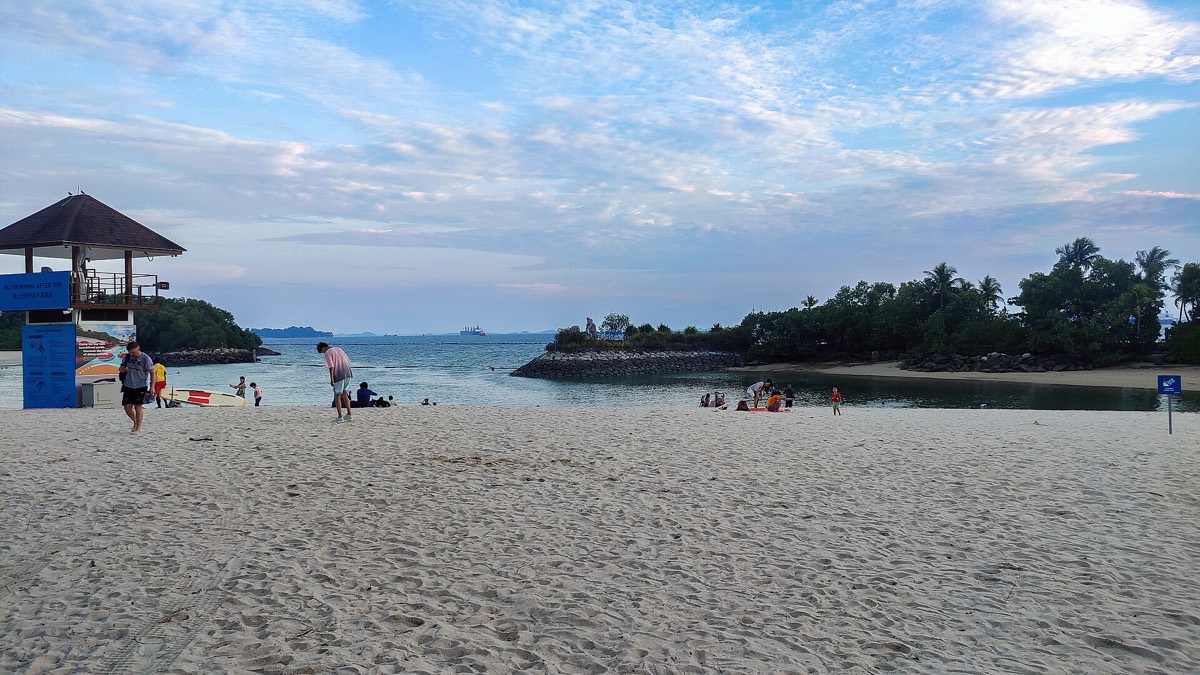
I like to walk across from the mainland on the Sentosa Boardwalk, with the harbour on one side, then wander west to Fort Siloso. From there, a free beach tram or an easy walk takes you along Siloso, Palawan and Tanjong beaches, each a little different: Siloso lively, Palawan family-friendly, Tanjong quieter and more relaxed.
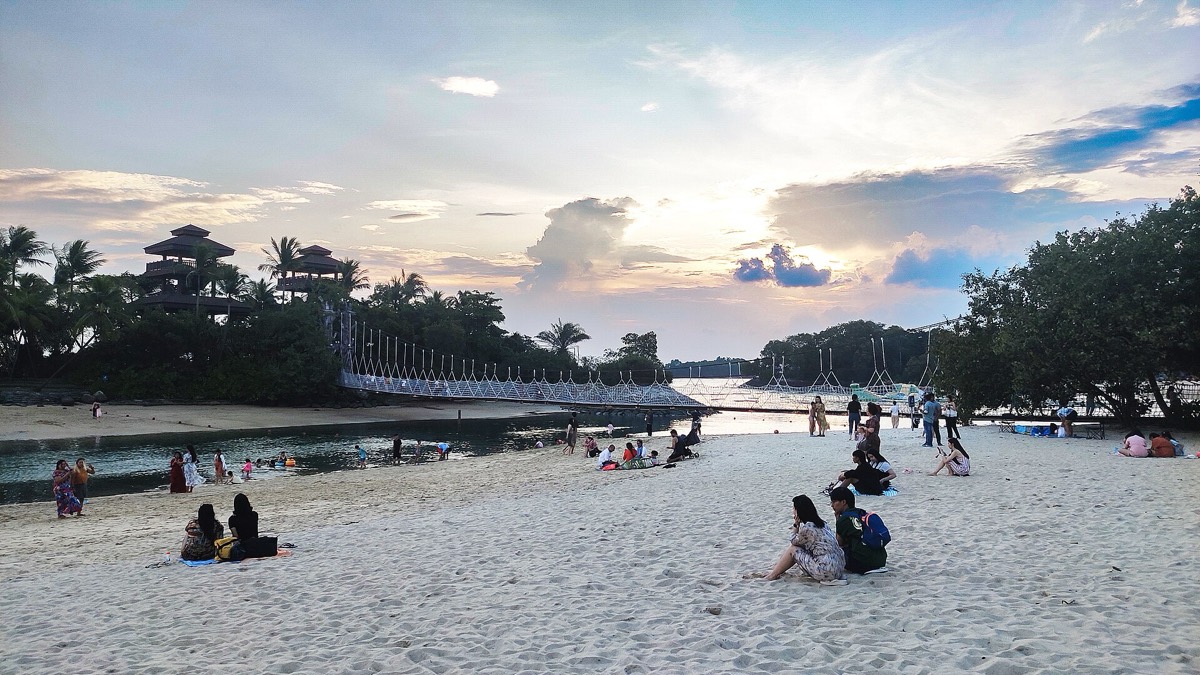
At Palawan Beach a small rope suspension bridge leads to a tiny islet with two wooden towers, and a sign claims it to be the southernmost point of continental Asia. Whatever you think of that claim, the view over the ship-filled straits towards the Indonesian islands is lovely, especially near sunset.
The story
Before it became Sentosa, which means 'peace and tranquillity', the island was called Pulau Blakang Mati, 'the island behind death' in Malay. Nobody knows exactly where the name came from; some say it refers to diseases that killed early settlers, others to pirates or to an old burial ground. It was renamed in the early 1970s when the government decided to develop it as a resort.
In the colonial era the island was a military base, guarding the entrance to the harbour. Fort Siloso, on its western tip, has gun emplacements, tunnels and barracks from the late 19th and early 20th centuries. In 1942 its guns fired at Japanese forces, though the Japanese famously came overland from the north rather than by sea. During the occupation that followed, the fort held Allied prisoners of war.
Many of the beaches are partly man-made, with sand imported and breakwaters built to calm the water, as the straits are among the busiest shipping lanes in the world. Looking out, you will see dozens of tankers and container ships at anchor, waiting their turn to enter the port.
The Fort Siloso Skywalk, a tall elevated walkway opened in 2015, lets you climb up through the trees to the fort for a view over the western end of the island.

Getting there
Walk from VivoCity next to HarbourFront MRT along the covered Sentosa Boardwalk, which takes about 15 minutes. The Sentosa Express monorail also runs from VivoCity, and cable cars run from Mount Faber and HarbourFront.
Within Sentosa, free beach trams and buses connect the main areas.
A suggested plan
- 9:00 amWalk across the Sentosa Boardwalk from VivoCity.
- 10:00 amClimb the Fort Siloso Skywalk and explore the fort and tunnels.
- 12:00 pmLunch at Siloso Beach.
- 2:00 pmWalk or take the beach tram to Palawan Beach and cross the suspension bridge.
- 4:00 pmSwim and relax at Tanjong Beach.
- 6:30 pmWatch the sunset over the straits, then return by monorail.
Where to stay
Most visitors come for the day from the city. Sentosa resorts are expensive; HarbourFront and Tiong Bahru are convenient and cheaper.
Good to know
- Walking in on the boardwalk is the cheapest way to enter; check current fees for the monorail and cable car.
- Weekdays are much calmer than weekends.
- Bring a swimsuit, sunscreen and water; there is little shade on the beaches.
- Combine with the Southern Ridges via the Mount Faber cable car.
- The sea can be murky and is not ideal for snorkelling; swim only in designated areas.
- Jellyfish are occasionally present; check warning signs.
- Peacocks and monkeys can be bold about food.