Coron Island: Kayangan Lake and the Twin Lagoon
Climb to the most famous viewpoint in the Philippines, then swim into a crystal lake and a lagoon where warm and cold water meet beneath the surface.

- Area
- Coron & the Calamianes
- Start from
- Coron town
- Distance
- about 30–40 minutes by boat each way
- Time needed
- 1 day
- Best season
- November – May
- Difficulty
- Moderate
- Transport
- Bangka from Coron town pier
- Tickets & rules
- Entrance fees to each site, collected by the Tagbanua community; life vest required in some areas
Why go
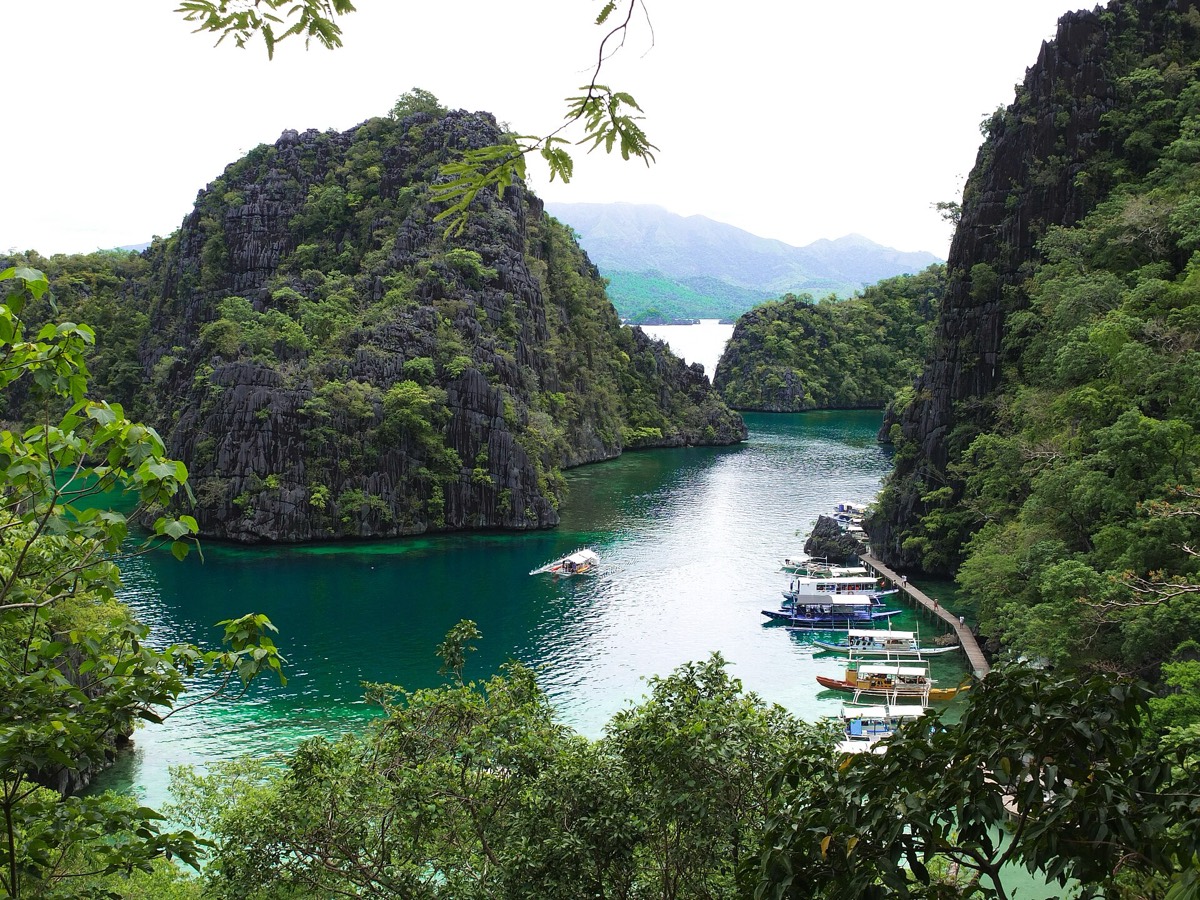
Coron Island rises from the sea just south of Busuanga like a fortress of jagged black limestone. Most of it is off-limits to visitors, which is part of what makes it so astonishing to approach. The boat noses into a cove of turquoise water, and from there a stairway of roughly three hundred steps climbs a saddle in the rock.
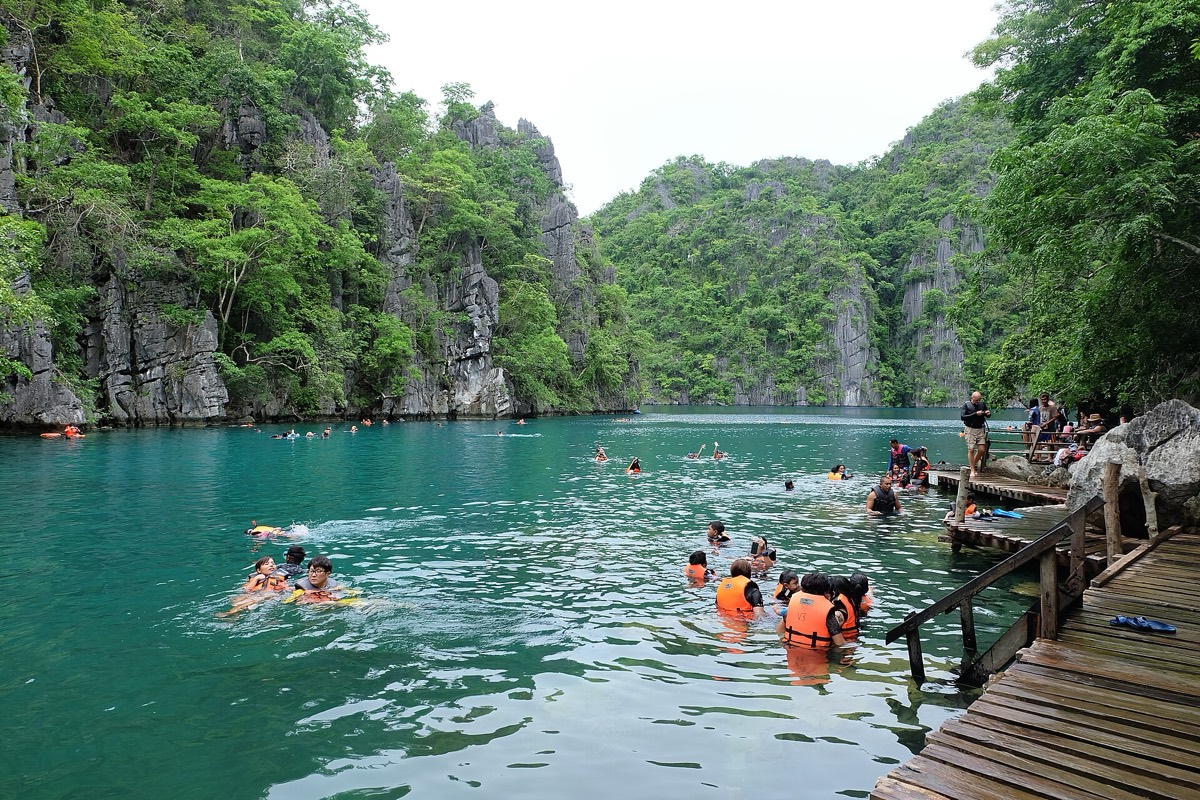
Halfway up is the viewpoint you have probably seen on a poster: the cove below, bangkas lined up, and limestone teeth rising from the water. Over the top and down the other side lies Kayangan Lake itself, cool, clear and brackish, surrounded by cliffs and still enough that you can watch your shadow on the rocks several metres below.
Twin Lagoon is next. You enter one lagoon by boat, then swim or climb a ladder through a gap in the rock into the second. Near the opening, the warmer seawater and cooler fresh water mix, and the view through your mask shimmers like heat haze on a road. It’s one of the strangest sensations I’ve had in water.
The story
Coron Island is the ancestral domain of the Tagbanua, an indigenous people who have lived in the Calamianes for centuries. In 1998 they won a Certificate of Ancestral Domain Claim covering both the island and its surrounding waters, one of the first such claims in the Philippines that included sea as well as land.
The Tagbanua consider many of the island’s lakes and caves sacred, and most of the island remains closed to visitors. They manage the open sites, collect the fees and set the rules. Kayangan is open only because the community has decided it can be, and the arrangement has helped protect the island from development.
Traditionally, Tagbanua families on Coron harvested edible bird’s nests from the cliffs and fished the reefs, and some still do. Coron town across the strait grew partly from the trade in nests and fish, and later from manganese mining in the twentieth century, long before the wrecks and lakes made it famous.

Getting there
Most visitors join a standard island-hopping tour from Coron town that combines Kayangan Lake, Twin Lagoon and a few snorkelling spots. Private boats can be arranged at the pier or through agencies. Trips leave around 8–9 am.
Coron town sits on Busuanga Island; flights land at Francisco B. Reyes Airport, roughly 30–40 minutes by van from town. Ferries also connect Coron with El Nido and Manila.
A suggested plan
- 8:00Board the bangka at the town pier.
- 8:45Kayangan Lake before the bigger crowds; climb to the viewpoint first.
- 10:30Twin Lagoon: swim through to the inner lagoon.
- 12:00Lunch on a beach, perhaps Atwayan or near Banol.
- 13:30Snorkelling at Skeleton Wreck or Siete Pecados reef, back by 16:00.
Where to stay
Coron town is the base for nearly every trip; it is small, practical and full of guesthouses on the hillsides. A few island resorts around Busuanga offer quieter evenings if you don’t mind boat transfers.
Good to know
- Leave early to reach Kayangan before the main wave of boats.
- Bring cash for the community fees, which may be charged separately.
- Wear shoes with grip; the steps are uneven and slick when wet.
- Follow Tagbanua rules strictly; some areas are sacred and photos may be restricted.
- Life vests may be compulsory in Kayangan; don’t argue with the staff.
- The steps get hot and crowded at midday; carry water.