El Nido Tour B: Snake Island and the caves
A day of caves and sandbars in the quieter southern half of Bacuit Bay, with a winding ribbon of sand that only appears at low tide.

- Area
- El Nido & Bacuit Bay
- Start from
- El Nido town
- Distance
- about 30 km of boat travel round trip
- Time needed
- 1 day
- Best season
- November – May
- Difficulty
- Easy
- Transport
- Shared or private bangka
- Tickets & rules
- Eco-tourism development fee; small cave fees sometimes collected on site
Why go
Tour B is the one that people skip, and that is exactly why I liked it. The boats are fewer, the stops more varied, and the scenery shifts from cathedral-like caves to a long, curving sandbar that looks, from the hill above it, like a pale serpent laid across the water. That is Snake Island, and at low tide you can walk its spine with turquoise water lapping on both sides.
Cudugnon Cave is reached through a small opening you crouch to enter, before the space opens into a cool chamber lit by a hole in the roof. Cathedral Cave, viewed from the boat, is a towering vaulted cleft in the cliff where swiftlets dart in and out. Each feels very different from the bright, busy lagoons of Tour A.
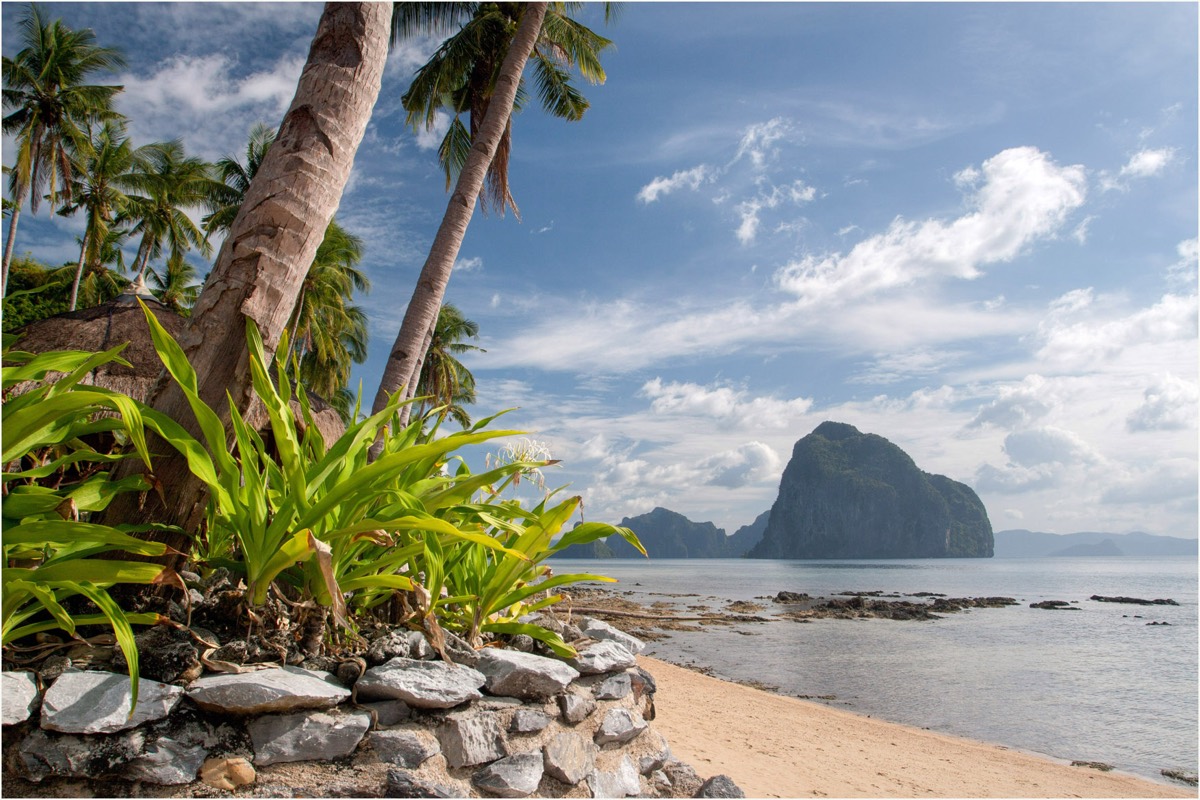
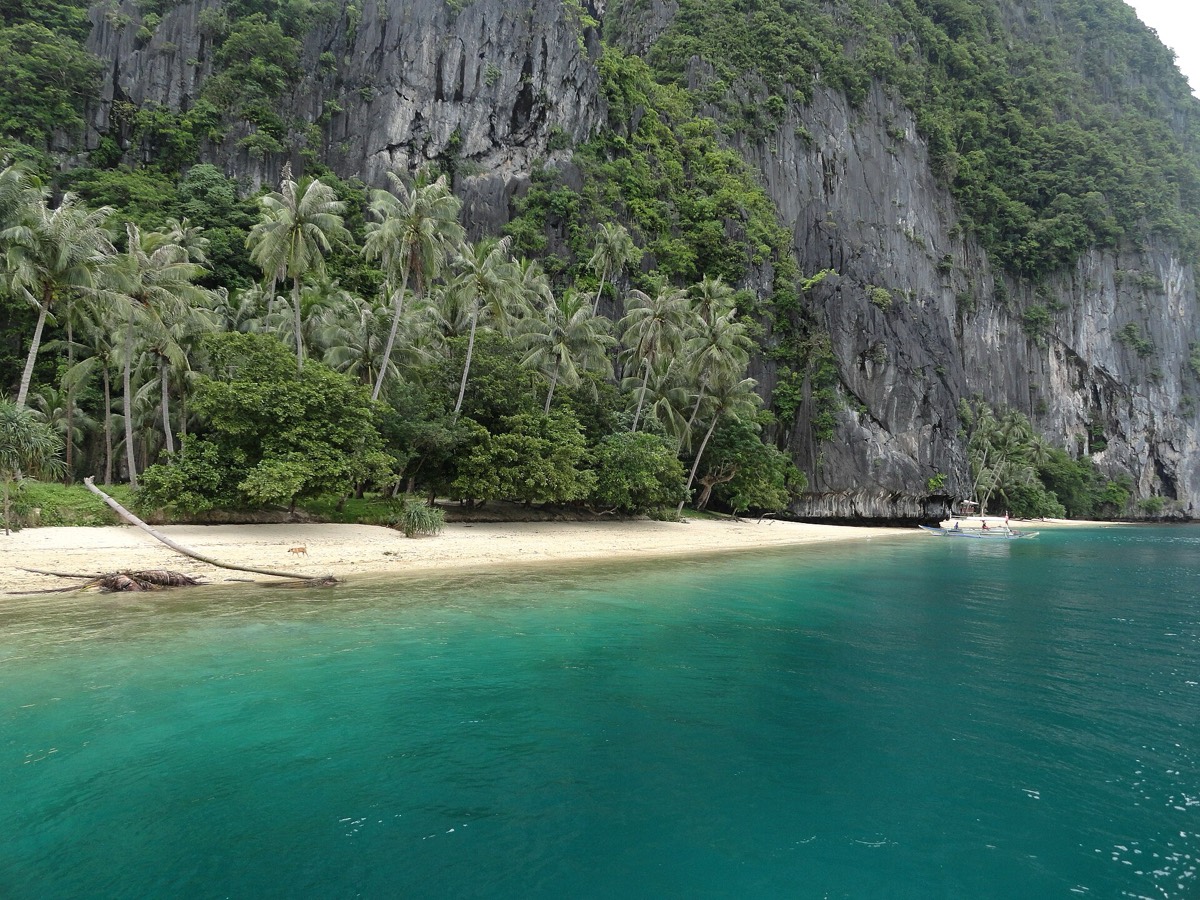
The day usually ends at Pinagbuyutan Island, a single great cone of rock rising from the sea with a perfect beach at its foot, or at Entalula, where the water over the sand is so clear the boat’s shadow looks painted onto the seabed. I sat on Entalula for an hour and didn’t lift the camera once.
The story
Cudugnon Cave is not only beautiful but also an archaeological site. Excavations in the area have found burial jars, pottery and human remains, evidence that people used these caves for burials long before the Spanish arrived. Palawan’s caves are a recurring thread in Philippine prehistory, from here down to the famous Tabon Caves in the south.
Snake Island’s sandbar is a living feature, shaped by currents that sweep sand between two small islands. Its curves shift slightly with storms and seasons, so the photographs taken from the viewpoint hill a decade ago don’t quite match the island today. Boatmen say a bad typhoon year can straighten it and a calm one can bend it again.
Pinagbuyutan’s name is often explained by older boatmen as relating to its single rounded peak, though I heard several versions of the story and none from a written source. What everyone agrees on is that it is the landmark that tells returning fishermen they are nearly home, a solitary dome visible from far across the bay.

Getting there
Departures follow the same pattern as other tours: book in town the day before, gather on the beach around 9 am, and return in the late afternoon. Tour B covers longer distances in open water, so in rough weather it is the first to be cancelled.
Bring cash for small fees; card machines are rare on the islands.
A suggested plan
- 9:00Leave El Nido beach and head south along the coast.
- 10:00Snake Island: climb the short trail for the view, then walk the sandbar.
- 11:30Cudugnon Cave and a swim off the beach in front of it.
- 12:30Lunch on the beach, followed by Cathedral Cave from the boat.
- 14:30Pinagbuyutan or Entalula for the last long swim, back by 16:30.
Where to stay
Any base in El Nido works for this tour. If you want to return to Snake Island at a quieter hour, ask about private boats or small island-hopping groups that start earlier than the standard tours.
Good to know
- Check the tide table: Snake Island is best near low tide when the sandbar is fully exposed.
- Bring a headlamp for Cudugnon Cave; the entrance is dark and slippery.
- Snorkelling here is patchier than Tour A, so focus on beaches and caves.
- Sea conditions on the southern route can be choppy; take seasickness tablets if you’re prone.
- Cave floors are slick with guano and water, and the exit squeeze is tight; take it slowly.