Kellie’s Castle: a Scottish planter’s unfinished dream
A roofless red-brick mansion above a river among the plantations, built by a Scottish planter who never saw it finished and wrapped in a century of ghost stories.

- Area
- Around Ipoh
- Start from
- Ipoh
- Distance
- about 15 km south, near Batu Gajah
- Time needed
- half a day
- Best season
- All year; mornings are coolest
- Difficulty
- Easy
- Transport
- Grab or a rented car
- Tickets & rules
- Entry ticket (check the current price)
Why go
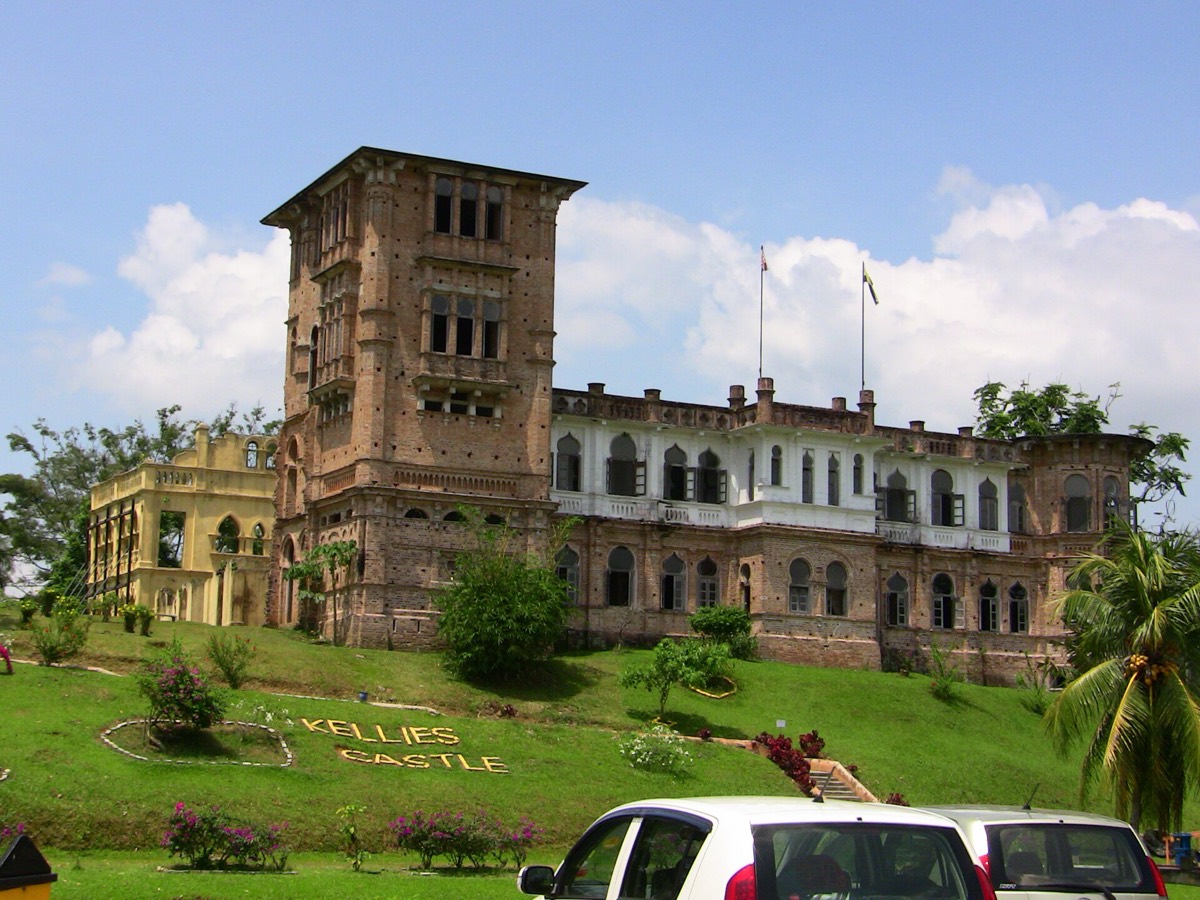
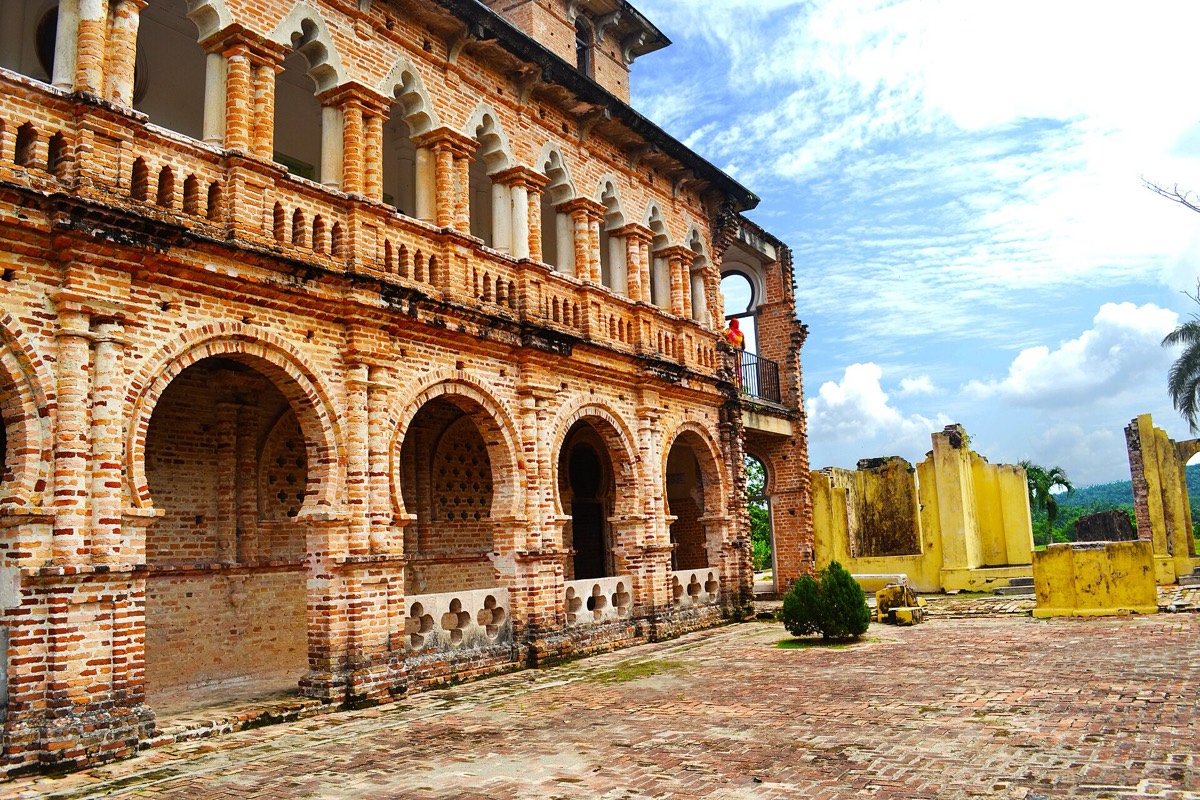
Kellie’s Castle is one of Malaysia’s most romantic ruins. It stands on a low rise above a bend of the river near Batu Gajah, its brick arches, towers and empty window frames looking more like the Scottish borders than tropical Perak. In the morning light the brickwork glows orange against the green.
You can wander freely through the unfinished rooms, climb narrow stairs to the roof terrace for views over the trees, and peer down into the cellars and passages that locals swear lead to secret tunnels. Children love it; so do photographers.
It is an easy half-day from Ipoh, and the drive itself, past rubber plantations, old mining lakes and small Malay and Indian villages, is part of the pleasure. It pairs well with Gua Tempurung if you have a car.
The story
William Kellie Smith was a Scot from Moray who arrived in Malaya in the 1890s and made his fortune from rubber and tin. He named his estate Kinta Kellas, after his home in Scotland, built a first house, and around 1915 began the grander mansion you see today, blending Scottish, Moorish and Indian styles. He brought workers and builders from South India for the job.
Then the Spanish flu reached the estate and many of the workers died. Kellie Smith built a Hindu temple nearby for the community, and in gratitude the workers added a small figure of the planter, in a white suit and hat, among the deities on its roof. You can still look for him there.
He planned modern luxuries, including what was said to be one of the first lifts in Malaya, a wine cellar and a rooftop for entertaining. But in 1926, on a trip to Europe, he fell ill and died in Lisbon. His family left, the estate was sold, and the castle was abandoned to the rain and the jungle.
Ghost stories inevitably followed: a figure seen at the windows, footsteps in the empty halls, a girl in a white dress. They are told with relish by guides and visitors alike, and nobody seems in a hurry to disprove them.

Getting there
From Ipoh, a Grab takes around 30 minutes via Batu Gajah; arrange a return pickup or ask the driver to wait, as cars can be scarce out here. With a rented car, the castle is well signposted from the main road.
Combine it with Gua Tempurung, further south near Gopeng, for a full day in the Kinta Valley.
A suggested plan
- 9:00Arrive as it opens and walk the ground floor before the tour groups.
- 9:45Climb to the roof terrace for views over the river and trees.
- 10:30Explore the cellars and the older first house nearby.
- 11:15Look for the Hindu temple with the planter’s figure on its roof.
- 12:00Lunch in Batu Gajah, then on to Gopeng or back to Ipoh.
Where to stay
Stay in Ipoh; the castle is an easy morning out, and there’s little accommodation around Batu Gajah.
Good to know
- Bring water and sun protection; much of the site is open to the sky.
- Wear shoes for uneven floors and narrow staircases.
- Go early on weekdays to have the rooms almost to yourself.
- Ask a guide or staff member for the ghost stories; everyone tells them differently.
- Some areas are fragile; respect barriers and don’t climb on walls.
- Mosquitoes gather near the river and cellars, so use repellent.